
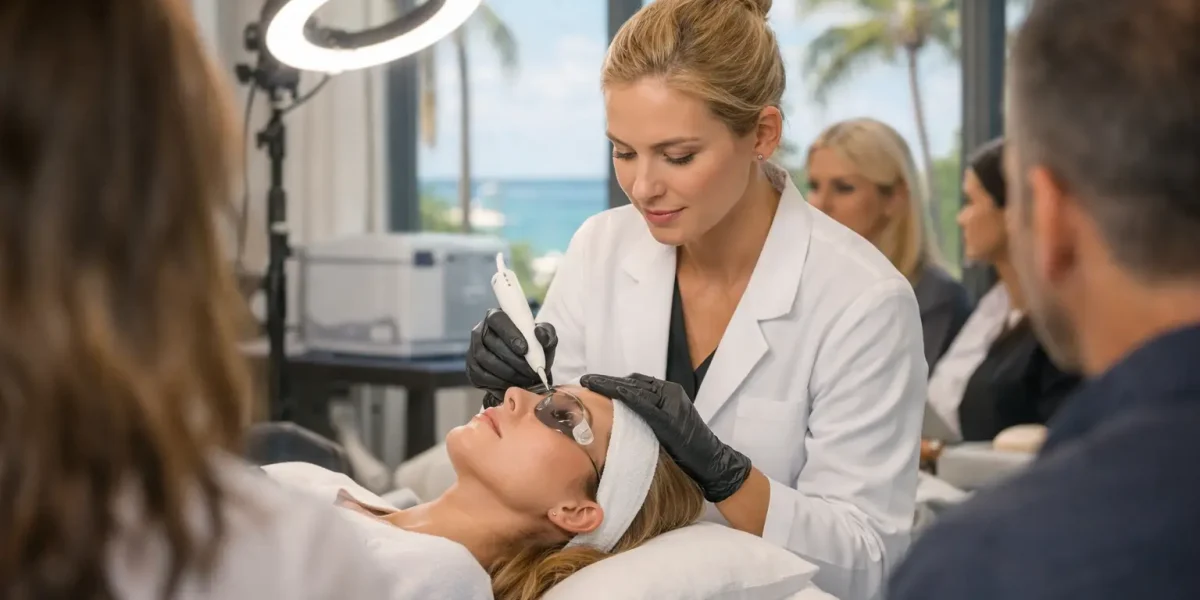
A plasma pen in untrained hands is not an advanced service. It is a risk to your client, your reputation, and the business you have worked hard to build. The right fibroblast training seminar Florida professionals choose should do more than show a few treatment clips. It should teach you how to assess skin, create controlled results, protect healing tissue, and know when a client is not the right candidate.
For beauty professionals ready to offer a non-surgical approach to visible skin tightening, fibroblast education can be a powerful next step. The value is not simply adding another device to your treatment room. It is learning how to deliver a refined experience that supports natural-looking improvement, confidence, and responsible care.
Why fibroblast training is different from a device demonstration
Fibroblast treatments use controlled plasma energy to create tiny superficial points on the skin. This controlled response supports the skin’s natural repair process and can help improve the appearance of fine lines, laxity, texture, and selected areas of asymmetry over time. Clients are often drawn to the idea of skin rejuvenation without injections or traditional surgery, but they still expect professional judgment and clear guidance.
That is why a quick device demonstration is not enough. A quality seminar teaches the reasoning behind each treatment decision. You need to understand how skin quality, tone, age, healing history, lifestyle, and treatment area affect the plan. The same technique that may be appropriate for a small area of upper-lid laxity may not be appropriate for deeper lines, heavily sun-damaged skin, or a client with a history that calls for extra caution.
Professional education should also set realistic expectations. Fibroblast is not a replacement for every surgical procedure, and it is not designed to promise a dramatic outcome for every face. It is a specialized option for clients who want progressive improvement and are willing to follow a proper healing protocol.
What a quality fibroblast training seminar in Florida should cover
The best training balances technical instruction with real-world client care. You should leave knowing not only how to hold and operate the device, but also why a particular pattern, spacing, intensity, or treatment approach is selected.
Skin assessment and client selection
Successful results begin before treatment day. A thorough consultation helps identify the client’s goals, timeline, lifestyle, and ability to follow aftercare. It also helps you recognize concerns that may make treatment unsuitable or require clearance from a qualified medical professional.
Your training should address skin classification, signs of compromised barrier function, active irritation, healing concerns, medication considerations, recent procedures, and a history of pigment changes or abnormal scarring. This is not the glamorous part of aesthetics, but it is where experienced practitioners protect their clients and their results.
A strong educator will also teach you how to say no with confidence. Turning away an unsuitable candidate is not lost revenue. It is professional leadership.
Treatment mapping and controlled technique
Fibroblast work demands precision. Treatment mapping should be based on the individual face and the direction of laxity, not a one-size-fits-all pattern copied from social media. Your seminar should explain how to work thoughtfully around delicate areas, how to maintain appropriate spacing, and how to avoid overworking the skin.
Hands-on education matters because the feel of device placement, pace, client positioning, and visual assessment cannot be learned from a manual alone. Watching an experienced trainer evaluate the skin in real time gives you a clearer standard for your own work.
At Isa Skincare, the philosophy behind advanced education is rooted in visible transformation with a disciplined approach. The goal is to help professionals create refined results while respecting the skin’s healing process.
Healing, aftercare, and client communication
A client who does not understand healing can mistake a normal stage of recovery for a problem. Your consultation and aftercare instructions must prepare them for what they may see, how long to plan for social downtime, and why they should never pick, scrub, or prematurely remove treated areas.
Training should cover aftercare conversations in detail: keeping the area clean, protecting it from sun exposure, avoiding heat and friction when advised, and understanding when to contact the practitioner or seek medical care. You also need a plan for follow-up. Results develop as the skin progresses through its natural repair response, so photographs and scheduled check-ins help clients see the value of their treatment over time.
Clear communication protects both sides of the appointment. Clients feel supported, and you establish a standard of care that reflects a premium aesthetic business.
Safety and compliance are part of your skill set
Before enrolling in a fibroblast training seminar in Florida, review the rules that apply to your license, location, scope of practice, facility, device use, sanitation, and supervision requirements. Regulations can change, and they may differ across states, counties, or professional license types. A seminar can provide education, but it does not replace your responsibility to operate legally within your jurisdiction.
Look for training that treats sanitation, consent forms, documentation, and contraindications as essential subjects rather than quick disclaimers at the end of the day. You should know how to maintain a clean treatment environment, document the service and settings used, photograph progress with consent, and communicate candidly about possible risks.
This is also where your brand reputation is built. Beautiful before-and-after results attract attention. Consistent standards, honest consultation, and responsible follow-up earn trust.
Questions to ask before you enroll
Not every training program is built for the same level of practitioner. Before committing, ask who the seminar is designed for and whether prior aesthetic experience is expected. A beginner may need more foundational support than an established esthetic professional adding a new advanced service.
Ask whether live models, supervised practical work, treatment protocols, consent guidance, and post-training support are included. Find out how many students are present for each hands-on session. A crowded room may be energizing, but it can limit the personal correction needed to develop technique.
You should also ask how the educator handles complications, uneven healing, and client dissatisfaction. The answer tells you more than a polished highlight reel. Advanced education should prepare you for the decisions that happen after the appointment, not only the moments that photograph well.
Finally, be clear about what equipment and ongoing expenses are involved. Adding fibroblast services may require investment in a quality device, disposables, insurance, marketing, consultation time, and recovery-focused client support. It can be a profitable addition, but only when pricing reflects your skill, time, operating costs, and the level of care you provide.
Building a service menu around real client goals
Fibroblast can fit naturally into a skin rejuvenation menu when it is presented as part of a thoughtful treatment plan rather than a miracle fix. Some clients want to focus on fine lines around the mouth or eyes. Others are seeking a firmer appearance in a targeted area where they have begun noticing skin laxity. Their goals may be similar, but their treatment plan should never be identical by default.
During consultation, speak in outcomes your client understands: smoother-looking skin, improved definition, a refreshed appearance, and gradual visible tightening. Then explain the trade-off honestly. Fibroblast treatment involves a healing period and requires patience. It may be an excellent fit for a client who values a non-surgical option and can follow aftercare, but it may not be the right choice for someone seeking immediate event-ready skin with no recovery time.
When you lead with education instead of pressure, the right clients recognize the value of your expertise.
The confidence to treat comes from repetition and restraint
The most valuable outcome of advanced training is not a certificate. It is the confidence to assess carefully, treat with purpose, and pause when the skin or the situation calls for restraint. That confidence grows through supervised practice, continued learning, honest case review, and a commitment to putting client safety ahead of a sale.
Choose education that raises your standards, not just your service list. When your technique, consultation, and aftercare all reflect the same level of expertise, your clients will feel the difference long after the first treatment session.