
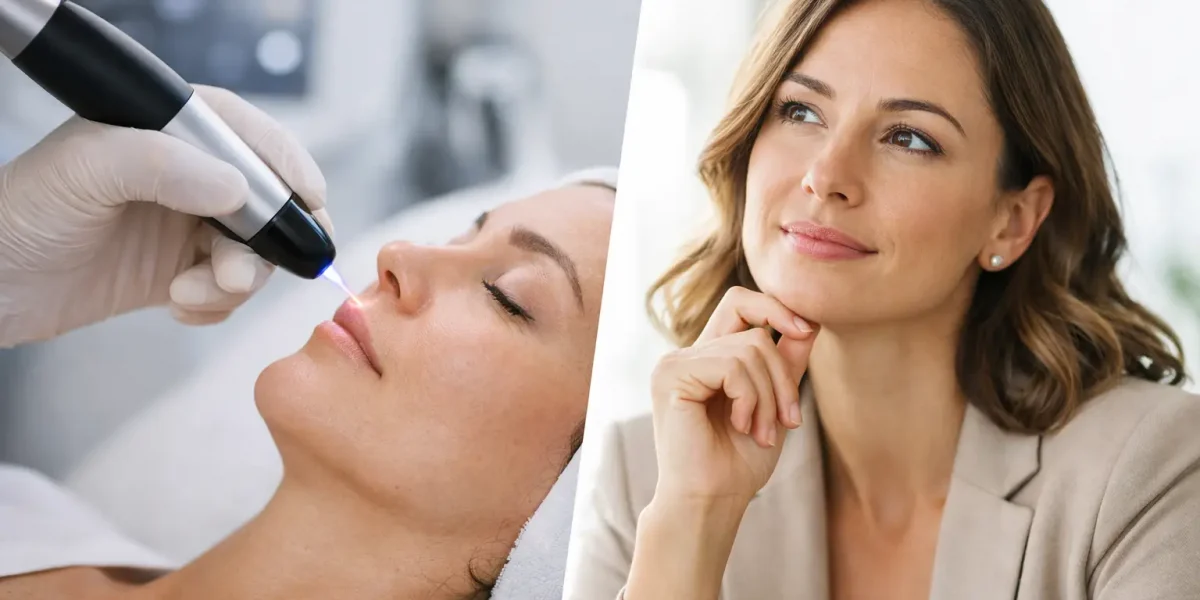
A lifted-looking brow, smoother lines around the mouth, firmer eyelid skin, and better facial balance can feel closer than surgery without requiring injections or incisions. But plasma treatment candidacy is never just about wanting a visible change. It is about whether your skin, health history, lifestyle, and expectations support a safe treatment plan and a beautiful healing process.
Plasma-based skin tightening is designed for women who want to enhance their natural beauty with a targeted, non-surgical approach. The right candidate understands that the initial lift can be exciting, while collagen renewal continues to develop over the months that follow. This is a results-driven treatment, but it is not a one-size-fits-all service.
What Plasma Skin Tightening Is Designed to Address
Plasma treatments use controlled energy at the skin’s surface to create tiny, precise points that support the skin’s natural renewal response. As healing progresses, the skin may appear firmer, smoother, and more refined. At Isa Skincare, Avatar Skin Lift Therapy is approached as a soft-surgery option for clients seeking visible correction without traditional surgical scarring.
This type of treatment is often considered for localized concerns rather than a full-face replacement for surgery. Common goals include hooded or crepey-looking eyelids, fine lines around the lips, forehead lines, loose-looking neck skin, jawline definition, and small areas of asymmetry. The best results come from treating a realistic concern with a plan that respects your skin’s limits.
If you are looking for dramatic volume replacement, major tissue repositioning, or an instant result with no healing period at all, another treatment may be a better fit. Confidence begins with choosing the right method, not forcing every concern into the same solution.
Plasma Treatment Candidacy Starts With Your Goals
A strong candidate has a specific concern and a realistic idea of improvement. You may be an excellent fit if you have mild to moderate skin laxity, fine wrinkles, or a feature you would like to refine without surgery. Many clients choose plasma treatment because they want a more rested, lifted appearance while still looking like themselves.
Your desired timeline matters, too. Plasma tightening can create an immediate tightening effect, yet the deeper visible improvement is progressive. Collagen remodeling does not happen overnight. If you have an important event in the next few days, it may not be the right time to schedule, since treated areas need time to heal and settle.
A consultation should also clarify what “natural” means to you. For one client, that may mean softening upper-lid laxity. For another, it may mean improving lipstick lines without changing the shape of her lips. Clear goals allow your practitioner to choose treatment areas carefully and avoid overcorrection.
Skin Type, Pigment, and Healing History Matter
Every skin tone deserves thoughtful treatment planning. However, people with a history of post-inflammatory hyperpigmentation, melasma, or dark marks after acne or injury may require additional caution. Any treatment that creates a controlled skin response can carry a risk of pigment changes, especially when aftercare and sun protection are not followed closely.
This does not automatically mean plasma treatment is off the table. It means candidacy should be assessed honestly and individually. Your practitioner may recommend a test area, pre-treatment skin preparation, a more conservative approach, or a different service if pigment risk is too high for your comfort level.
Your scar history is equally important. Tell your provider if you have developed raised scars or keloids, experienced prolonged redness after procedures, or had difficulty healing after previous cosmetic treatments. A beautiful outcome depends as much on how your skin heals as it does on the technology used.
When It May Be Better to Wait
The safest answer is sometimes “not yet.” Plasma treatment should generally be postponed when the skin is actively irritated, sunburned, infected, or experiencing a flare of eczema, dermatitis, cold sores, or acne in the proposed treatment area. Treating compromised skin can increase discomfort and interfere with recovery.
Pregnancy and breastfeeding are also times when many clients choose to delay elective aesthetic procedures. Hormonal shifts can affect skin sensitivity and pigment behavior, and waiting removes unnecessary uncertainty.
A consultation should include a complete discussion of medications and medical history. Recent isotretinoin use, certain immune-suppressing medications, blood-thinning medications, uncontrolled diabetes, autoimmune concerns, healing disorders, or a history of seizures may affect whether treatment is appropriate. Do not stop prescribed medication to qualify for a cosmetic service. Your treating physician and qualified aesthetic practitioner should guide that decision.
If you are prone to cold sores and are considering treatment near the mouth, let your provider know before booking. Preventive steps may be recommended based on your medical history.
Your Lifestyle Can Affect Your Result
Plasma treatment works best for clients who can protect their investment during healing. The tiny treatment points will need to remain clean, dry as directed, and untouched while they naturally resolve. Picking, scrubbing, applying unapproved products, or covering the area too soon can raise the risk of infection, irritation, and unwanted marks.
Sun exposure is another major consideration. If your work, vacation plans, or daily routine make it difficult to avoid direct sun and consistently use recommended sun protection, schedule for a time when you can commit to proper recovery. This is especially relevant in bright, warm climates where incidental exposure adds up quickly.
You should also be comfortable with temporary visible healing. Redness, swelling, sensitivity, and small crusted dots are normal possibilities depending on the area and intensity of treatment. For some clients, that downtime is a worthwhile trade-off for a long-lasting, non-surgical improvement. For others, a treatment with less visible recovery may better suit their lifestyle.
Questions to Ask at Your Consultation
A quality consultation is not a quick sales conversation. It is your chance to understand the recommendation, the recovery process, and the limits of what can be achieved. Bring photos of results you like, but be open to professional guidance about what is realistic for your own facial structure and skin quality.
Ask which areas are being treated, why those areas were selected, and whether your goals may require more than one session. Ask what healing looks like day by day, when you can return to makeup and exercise, and what signs would require you to contact your provider. You should also ask about risks specific to your skin type, including pigment changes and scarring.
A confident practitioner will not promise perfection. She will explain the expected improvement, show you how to prepare, and tell you when another option would serve you better. That level of honesty protects both your safety and your result.
Preparing for a More Confident Decision
Before your appointment, arrive with clean skin and a full list of medications, supplements, allergies, past cosmetic procedures, and relevant medical conditions. Mention recent fillers, peels, laser treatments, microneedling, or injectable appointments, even if they were performed elsewhere. Spacing between treatments may be necessary to allow the skin to fully recover.
Avoid treating plasma as an impulse appointment. Give yourself enough time for the consultation, the healing period, and the gradual collagen-building phase. When your skin is healthy, your expectations are grounded, and your aftercare plan is realistic, plasma treatment can be a powerful way to refine the features that already make you beautiful.
The right candidacy decision should leave you feeling informed, not pressured. Choose the treatment because it fits your goals, your skin, and your life – then give your results the care and patience they deserve.