
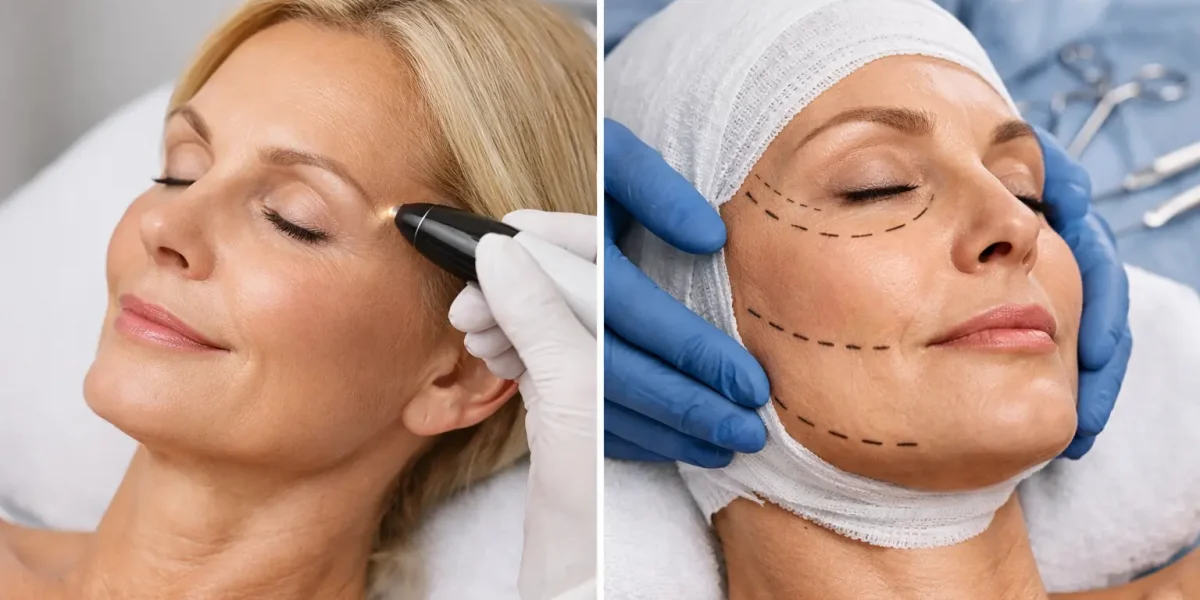
When your skin starts to soften around the eyes, jawline, or neck, the real question is not whether you should do something. It is which option makes sense for your face, your timeline, and your comfort level. In the plasma tightening vs facelift conversation, the best choice depends on how much laxity you have, how dramatic a result you want, and how willing you are to accept downtime, cost, and surgical recovery.
Some women want a visible refresh without scalpels, stitches, or months of planning. Others are past the point where a surface-level tightening treatment will give them the level of correction they want. Both approaches have a place. The key is knowing where each one truly performs well, and where expectations need to be realistic.
Plasma tightening vs facelift: the core difference
Plasma tightening is a non-surgical skin treatment that uses controlled plasma energy to create tiny points on the skin’s surface. That controlled response stimulates collagen, contracts tissue, and gradually improves laxity, fine lines, and crepey texture. It is often chosen for areas like the upper eyelids, under-eyes, crow’s feet, around the mouth, and parts of the lower face where skin quality and mild to moderate looseness are the main concern.
A facelift is surgery. It works on a deeper structural level by lifting and repositioning tissue, removing excess skin, and creating more dramatic correction in the mid-face, jawline, and neck. If you have significant sagging, heavy jowls, or loose neck skin, surgery can achieve a level of lift that non-surgical treatments simply cannot match.
That distinction matters. Plasma tightening improves and tightens skin. A facelift repositions facial structures. If your issue is mostly skin texture and early laxity, plasma may be enough. If your issue is deeper descent and volume loss combined with heavy skin redundancy, a facelift may be the stronger option.
Who is a better candidate for plasma tightening?
Plasma tightening tends to be a smart fit for women who want visible improvement without going down the surgical path. It works especially well when the signs of aging are present but not severe. Think hooding on the upper lids that is beginning to bother you, lines above the lip, soft creasing under the eyes, or mild slackness that makes the face look tired rather than dramatically aged.
It is also attractive for women who value shorter recovery, lower cost than surgery, and a treatment plan that feels more manageable. Many clients are not interested in anesthesia, incisions, or the idea of taking several weeks away from work and normal life. They want tightening, refinement, and collagen stimulation with less disruption.
This is where a branded soft-surgery approach such as Avatar Skin Lift Therapy stands out. When plasma technology is applied with skill and a strong understanding of tissue response, the goal is not to make you look different. It is to restore tighter, firmer, more polished contours while keeping your natural expression intact.
That said, good candidates still need to understand the limits. Plasma tightening can create impressive change, but it does not remove large amounts of excess skin or replicate a surgical lift in advanced aging cases.
When a facelift makes more sense
Some faces are asking for more than skin tightening. If the cheeks have dropped significantly, the jawline has lost definition, the neck shows heavier laxity, or there is substantial skin excess, a facelift may be the better investment.
This is often the point where women feel frustrated by treatments that promise a lift but deliver only modest refinement. The truth is simple: once facial aging becomes structural, surgery can provide a more comprehensive reset. It addresses sagging at a deeper level and can create stronger contour changes in a single procedure.
A facelift may also make sense if you want the most dramatic result possible and are comfortable with the trade-offs. Those trade-offs usually include higher cost, more downtime, bruising, swelling, surgical risks, and the emotional weight that can come with an operation.
There is no prize for choosing surgery too early, and there is no benefit in avoiding it when it is clearly the right tool. What matters is matching the treatment to the actual condition of the tissue.
Results: subtle refinement or major lift?
This is where many treatment comparisons become misleading. Plasma tightening and facelifts are not competing at the exact same level.
Plasma tightening can deliver a fresher, firmer look. Many clients notice tightening relatively quickly, then continue to see improvement as collagen remodels over the following weeks and months. Results can be especially rewarding in smaller, delicate zones where surgery may feel too aggressive or unnecessary.
A facelift usually produces a larger visual shift. The jawline often appears cleaner, the lower face firmer, and the neck smoother. For women with advanced laxity, this level of correction is often what finally brings the face back into balance.
So the real question is not which one is better in general. It is whether you want refinement or repositioning. Plasma can beautifully refine. A facelift can more dramatically reposition.
Downtime, healing, and lifestyle impact
For many women, downtime is where the decision gets real.
Plasma tightening typically involves redness, swelling, and the visible carbon crusting pattern that forms as the skin heals. The recovery is far easier than surgery, but it is still a process. You need to plan for social downtime, proper aftercare, and patience while the skin settles. The payoff is that healing is generally faster and less disruptive than a facelift, with no incisions or surgical scarring.
A facelift comes with a more intensive recovery. Swelling and bruising can last for weeks, and the timeline for looking fully polished is longer than many people expect. Even when healing goes smoothly, it requires commitment. You are not just booking a treatment. You are planning a surgical event and recovery period.
If your life does not allow for that right now, plasma tightening may be the option that fits your reality better.
Cost matters, but value matters more
Plasma tightening usually costs far less upfront than a facelift. That makes it appealing for women who want visible rejuvenation without a major financial leap. It can also be a strong maintenance treatment for clients who are not ready for surgery or want to delay it.
A facelift has a higher price because it includes surgical expertise, facility fees, anesthesia, and a more complex procedure. But if you have advanced sagging and you keep spending on treatments that do not go far enough, surgery may actually be the better long-term value.
This is where honesty matters. A less expensive treatment is not a bargain if it cannot solve the problem you are trying to fix. On the other hand, surgery is not automatically smarter if your concerns are still in the early to moderate range.
The most common mistake in plasma tightening vs facelift decisions
The biggest mistake is choosing based on fear or hype instead of tissue condition.
Some women avoid surgery no matter what, even when their laxity has moved well beyond what non-surgical treatment can meaningfully improve. Others jump to the idea of a facelift when a targeted tightening treatment could give them exactly what they need with less downtime and far less commitment.
The second mistake is assuming all plasma treatments are the same. Technique matters. Device quality matters. Provider experience matters. Results depend heavily on how well the practitioner understands facial anatomy, skin behavior, and treatment design. In experienced hands, plasma tightening can create elegant, confidence-building improvement. In inexperienced hands, expectations and outcomes can miss each other.
So which one fits you?
If you are noticing early hooding, crepey skin, fine lines, mild laxity, or small areas that need tightening, plasma is often the more attractive option. It supports collagen, improves skin firmness, and gives many women a fresher look without the burden of surgery.
If you are dealing with heavier jowls, deep lower-face sagging, loose neck skin, or a more advanced loss of facial support, a facelift may be the treatment that truly matches your goals.
And sometimes the answer sits in the middle. A woman may choose plasma tightening now because it matches her current skin condition and lifestyle, then consider surgery later if aging progresses. That is not settling. That is making a smart decision based on timing.
The strongest aesthetic plan is not the most aggressive one. It is the one that respects your face, your goals, and the level of correction you actually need. When you choose from that place, the result tends to look more natural, more confident, and far more worth it.
If you are weighing your next step, look past the trend words and ask a better question: do you need better skin tightening, or do you need a true surgical lift? That answer will point you in the right direction every time.