
Heavy upper lids can change your whole expression before you ever notice fine lines anywhere else. Eyes start to look tired, makeup transfers, and that smooth lid space gets smaller year by year. This guide to plasma eyelid tightening is for women who want a real lift without jumping straight to surgery.
Plasma eyelid tightening is a non-surgical treatment that targets loose or crepey skin around the upper or lower eyelids. It works by creating tiny controlled points on the skin surface with plasma energy. That controlled response contracts the skin and kicks collagen production into motion, which means you often see an immediate tightening effect followed by more improvement over the next several weeks and months.
For the right client, this treatment sits in a very attractive middle ground. It offers more visible change than creams or devices used at home, but avoids the incisions, stitches, and longer recovery that come with blepharoplasty. That does not make it a replacement for surgery in every case. It makes it a strong option for mild to moderate laxity, especially when you want lift, definition, and fresher-looking eyes with less downtime.
What plasma eyelid tightening actually does
The goal is not to freeze the face or overcorrect the eye area. The goal is to tighten lax skin, soften creasing, and restore a more open appearance. On the upper lid, that can mean improving hooding and creating more visible lid space. On the lower lid, it can help with fine lines and mild loose skin that make the under-eye look textured or tired.
The treatment works by creating a pattern of micro-injuries that never should be random or aggressive for the sake of being aggressive. Precision matters. The eyelid skin is delicate, and this is one area where expertise shows immediately in both healing and final outcome. A skilled provider understands how much energy to use, where to place treatment points, and when a conservative approach will give a better aesthetic result.
That is why plasma is often described as soft surgery. You can get meaningful tightening, but it still depends on anatomy, skin quality, and how much excess tissue is present before treatment starts.
Who is a good candidate in a guide to plasma eyelid tightening?
The best candidates usually have mild to moderate eyelid laxity, crepey texture, fine wrinkling, or early hooding. They want improvement that is visible but not drastic overnight. They also understand that collagen remodeling takes time.
You may be a strong candidate if your concerns include tired-looking upper lids, small folds of loose skin, under-eye wrinkling, or minor asymmetry that makes one eye appear heavier than the other. Plasma can also appeal to women who want to avoid injectables in this area or who simply prefer a non-surgical path first.
It may not be the best choice if you have very significant excess skin, severe drooping, certain eye conditions, active irritation, or skin tones and healing histories that require extra caution. If you are prone to post-inflammatory pigmentation or keloid-type scarring, your provider should evaluate that carefully. Honest consultation matters more than sales language here. A good provider will tell you when plasma is the right answer and when it is not enough.
What to expect during treatment
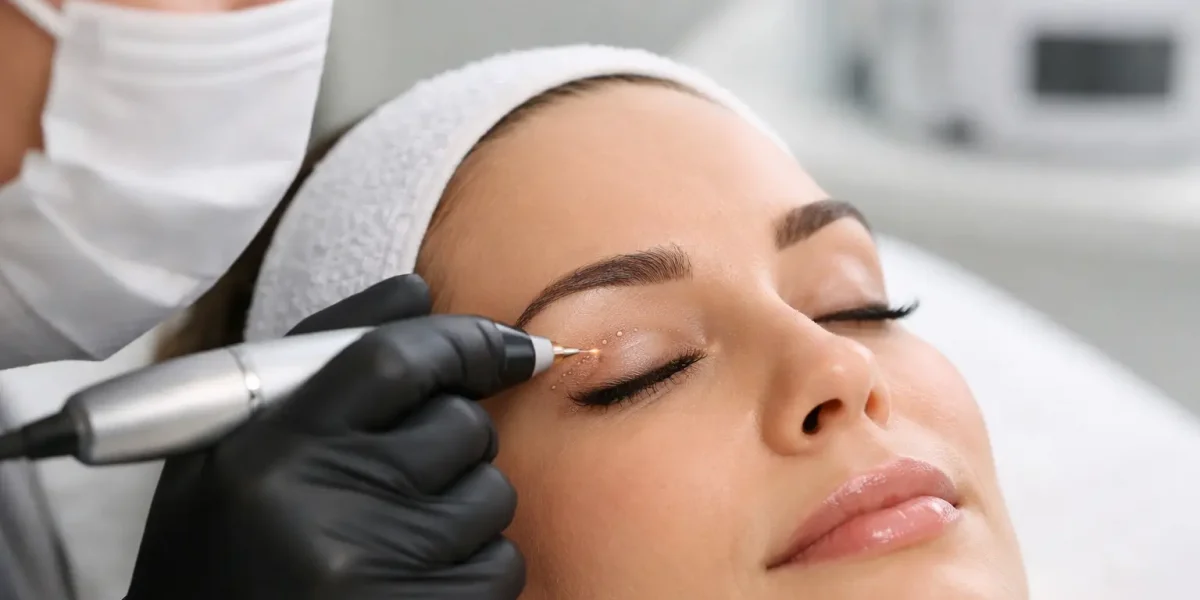
Most appointments begin with photos, assessment, and topical numbing. Once the area is numb, the provider uses a plasma device to place a series of tiny dots across the treatment zone. You may feel heat, a snapping sensation, or mild discomfort, but it is generally very manageable.
Treatment time is usually shorter than people expect, although the full appointment takes longer because preparation matters. Eye protection, proper mapping, and a clean technique are part of doing this well. The skin is left with tiny carbon crusts or dot-like marks, which are a normal part of the healing response.
Some clients treat only the upper eyelids. Others combine upper and lower areas for a more complete refresh. That depends on your anatomy and your goals. Chasing every line at once is not always the smartest plan. Sometimes the most elegant result comes from treating the one area that changes the eye most noticeably.
Healing and downtime
This is where expectations need to stay realistic. Plasma eyelid tightening is not surgery, but it is not a lunchtime facial either. Swelling is common, especially around the eyes, and it can be significant for the first few days. The small crusts usually remain visible for about five to seven days, sometimes a bit longer depending on your skin and aftercare.
That means social downtime is real. If you have an event, photos, or travel on the calendar, plan ahead. Most women prefer to schedule treatment when they can give themselves a full week to heal without pressure.
The good news is that once the surface healing is underway, the area continues to improve. Skin often looks tighter fairly quickly, but the more meaningful collagen response keeps building over the next eight to twelve weeks and can continue beyond that. If someone promises final results immediately, be cautious. Immediate contraction is only one part of the story.
Aftercare makes a difference
The first rule is simple – do not pick the crusts. Let them shed naturally. Picking can interfere with healing and increase the risk of pigment changes or marks.
You also need to protect the area from heat, friction, and unnecessary products while the skin is recovering. Your provider should give you clear aftercare instructions, and you should follow them exactly. Sun protection becomes especially important once the skin has re-epithelialized, because fresh skin is more vulnerable to discoloration.
Healing well is part treatment, part technique, and part client behavior. Even the best procedure can be compromised by poor aftercare.
Benefits women care about most
What makes this treatment so appealing is not just tightening. It is the overall shift in how the eyes read. A small lift in the upper lid can make you look more rested, more polished, and less weighed down. The under-eye can look smoother and less papery. Makeup often sits better once the skin is firmer.
Another major advantage is that results can look natural. You still look like yourself, just more awake. For many women, that is exactly the point. They do not want everyone asking what they had done. They want people to notice that they look refreshed.
For clients seeking visible improvement without injections, stitches, or a scar line, plasma sits in a very appealing category. At Isa Skincare, that balance between immediate lift and progressive collagen renewal is a major reason this type of treatment continues to attract women who want smart, modern rejuvenation.
Risks, limits, and honest trade-offs
Any credible guide to plasma eyelid tightening should say this clearly: the treatment has limits. If your eyelids are very heavy, if brow position is a major factor, or if the skin excess is advanced, surgery may still give the better result. Plasma can improve laxity, but it cannot do everything a surgical excision can do.
There are also risks. Swelling, redness, temporary sensitivity, and crusting are expected. Pigment changes can happen, especially if aftercare is poor or if the treatment was not well matched to your skin. Infection is uncommon but possible. Poor technique can lead to uneven results or prolonged healing.
That is why price should never be your only filter. The eye area is not where you bargain shop. Experience, training, and a strong understanding of skin behavior matter.
How many sessions will you need?
Some clients get meaningful improvement in one session. Others do better with a series, especially when the goal is additional tightening or refinement after the first round of healing. More is not always better. Over-treatment can create unnecessary trauma and does not guarantee a prettier result.
A thoughtful provider will assess your tissue response after healing before recommending another session. Good aesthetic work is strategic. It respects the skin instead of forcing it.
Is plasma eyelid tightening worth it?
If your concern is early to moderate eyelid laxity and you want a noticeable lift without surgery, it can absolutely be worth it. The treatment tends to appeal to women who value visible change, natural-looking results, and a shorter recovery than surgery even if they still need a few quiet days at home.
The best outcomes happen when expectations are clear from the start. Plasma can tighten, smooth, and refresh the eye area. It can make you look more awake and restore confidence in a part of the face that often gives away fatigue first. What it cannot do is turn severe laxity into a surgical-level correction.
The smartest next step is not chasing trends. It is choosing a provider who can assess your eye area honestly, treat conservatively when needed, and build a result that still looks like you – only brighter, firmer, and more confident.