
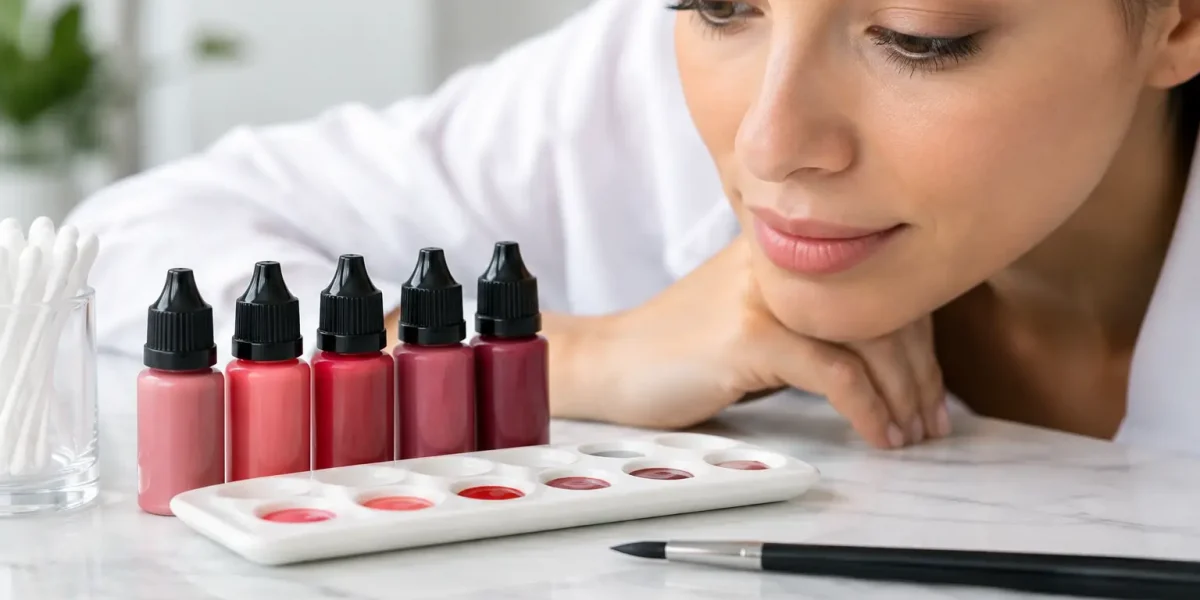
Lip blush should make people notice your smile, not immediately notice your permanent makeup. Knowing how to select lip blush pigment begins with one truth: the shade you see in a pigment bottle is not the color you will wear after healing. Your natural lip tone, undertone, skin tone, lip condition, and the artist’s technique all influence the final result.
The goal is not to copy a trendy nude, a dramatic red, or a filtered photo. It is to create a refined, healthy-looking lip color that enhances your features, restores definition, and still feels like you.
How to Select Lip Blush Pigment for Your Features
A successful lip blush selection starts with a close assessment of your bare lips in natural light. Your artist should look beyond the color you request and consider the natural pigment already present in your lips. Pale lips, cool mauve lips, brown-toned lips, and lips with uneven pigment will each heal differently under the same formula.
If your lips have a naturally cool cast – meaning they appear lavender, purple-brown, grayish, or blue-toned – they may need warmth before a soft pink or nude can heal true to color. Applying a light pink directly over cool or dark lips can create an ashy, muted result rather than the fresh blush you imagined. In these cases, a skilled artist may recommend a warm modifier or a neutralization session first.
Warmer lips often have peach, coral, or terracotta tones underneath. They may hold warm pigment beautifully, but a shade that is too orange can become stronger than expected after healing. Neutral lips have more flexibility, yet they still require thoughtful color balancing. This is why an experienced permanent makeup professional evaluates your lips instead of simply matching a tube of lipstick.
Your facial coloring matters too. A pigment should support the warmth or coolness in your complexion, brows, and natural lip line. The right shade can brighten your entire face. The wrong one can make teeth appear less white, pull attention to unevenness, or look disconnected from your natural coloring.
Choose the Healed Color, Not the Fresh Color
Fresh lip blush looks brighter, denser, and often warmer immediately after treatment. That is normal. As the lips heal, the surface may darken briefly, flake, and then appear much lighter before the pigment settles. The final result develops gradually over several weeks.
For that reason, choosing pigment is really choosing a healed destination. If you want a delicate rosy tint, the artist may use a formula that appears more vivid during the appointment than you expected. If you request a bold berry lip, the safest approach may be to build color in stages rather than over-saturating the lips in one session.
Most clients benefit from a result that is one to two levels more defined than their natural lip color. It restores the appearance of healthy circulation and shape without forcing you into a color that competes with every makeup look. A stronger effect is possible, but it requires a realistic conversation about skin behavior, maintenance, and personal style.
Start With the Result You Want Every Day
The best pigment choice depends on how you want to look on an ordinary morning, not only when you are dressed for an event. Think about whether you want lips that appear softly tinted, naturally pink, warm and sun-kissed, or more polished and defined without lipstick.
A sheer, neutral lip blush is often ideal for clients who want to wake up looking refreshed, wear minimal makeup, or create more balance around faded lip borders. Rose, peach-rose, and muted pink families can produce an elegant everyday result when they are adjusted for your undertone.
A richer shade may suit someone who regularly wears berry, brick, wine, or red-based lipstick and wants greater facial definition. Still, permanent makeup is not meant to replace every lipstick in your collection. It gives you a dependable base, then lets you add gloss, liner, or bolder color whenever the occasion calls for it.
Bring inspiration photos, but choose them carefully. Look for unfiltered healed results on clients with similar natural lip depth and skin tone. A photo taken immediately after a procedure is useful for showing shape, but it cannot predict your healed shade. Your own lips are the best starting point.
Consider Your Natural Lip Border and Pigmentation
Lip blush can soften uneven tone, restore the look of a faded vermilion border, and make the lips appear more symmetrical. It cannot always erase every natural variation, especially when there is significant darkness, scarring, or a history of cold sores. Setting the right expectation protects your result.
If one area of the lip is darker than the rest, the pigment plan may need to be customized. An artist may work with warmer corrective tones in the deeper area and a carefully balanced target shade across the lips. Trying to cover dark pigmentation with an overly pale color usually creates the very contrast clients are hoping to avoid.
Mature lips deserve the same individualized attention. As natural lip color fades and borders become less distinct, a soft blush can bring back youthful definition without creating a harsh outline. In many cases, a subtle neutral rose or warm pink is more flattering than a dark liner effect. The aim is visible improvement with a believable finish.
Ask About Formula, Technique, and Safety
Pigment selection is not only about color names. Formula quality, color theory, needle choice, depth, and saturation all determine how the treatment heals. A beautiful shade applied too heavily may heal too intense. A perfect formula placed without enough coverage may fade unevenly. The artist’s training matters as much as the pigment itself.
During your consultation, ask to discuss the expected healed range, not a guaranteed exact shade. Permanent makeup is a biological process, and every client retains color differently. Skin that is very oily, frequently exfoliated, sun-exposed, or treated with active skincare may fade faster. Smoking, certain medications, and immune response can also affect retention.
Be transparent about previous lip tattooing, lip filler, cosmetic procedures, allergies, and a history of cold sores. Previous pigment can change the plan significantly. If you are prone to cold sores, speak with your medical provider before treatment about appropriate preventive care, since lip procedures can trigger an outbreak.
A responsible artist will never promise that one pigment looks identical on every person. They will explain the variables, show you the plan, and select a color that works with your lips rather than against them.
Do Not Let Trends Override Your Undertone
Cool mocha lips, bright cherry stains, and ultra-pale nude shades may dominate social media, but permanent makeup should outlast a passing trend. Your lip blush should still look elegant when your hairstyle changes, your favorite lipstick changes, or the trend cycle moves on.
This does not mean playing it safe to the point of invisibility. It means choosing a pigment family that gives you confidence for years, then controlling how soft or saturated the finished effect becomes. Warm rose, rosy nude, coral-pink, muted berry, and neutral red families can all be customized beautifully when the underlying lip tone is respected.
If you are undecided between two shades, choose the more versatile option for your first session. You can usually add depth at a touch-up more easily than you can remove a color that healed too dark, too cool, or too bright.
Your Touch-Up Is Part of the Color Plan
Lip blush is commonly completed in stages. The first appointment establishes shape and a foundation of color; the follow-up appointment refines retention, balances any areas that healed lighter, and adjusts the tone if needed. This is where a soft result becomes polished and intentional.
Healing should guide the touch-up decision. Some clients retain warm tones strongly, while others need a slight boost in the center of the lips or along a faded border. Do not judge the final outcome in the first week. Allow the skin to complete its healing cycle, then return for an expert assessment.
After your initial sessions, long-term maintenance depends on your skin, lifestyle, and desired intensity. A lighter, natural blush may need refreshing sooner than a more saturated lip. Consistent sun protection and gentle lip care help preserve clarity and color.
The right lip blush pigment is not the shade that looks most exciting in a bottle. It is the one that respects your undertone, heals in harmony with your skin, and gives you the confident, naturally enhanced lips you want to see in the mirror every day. A personalized consultation with an experienced artist turns that choice from a guess into a treatment plan made for your face.