
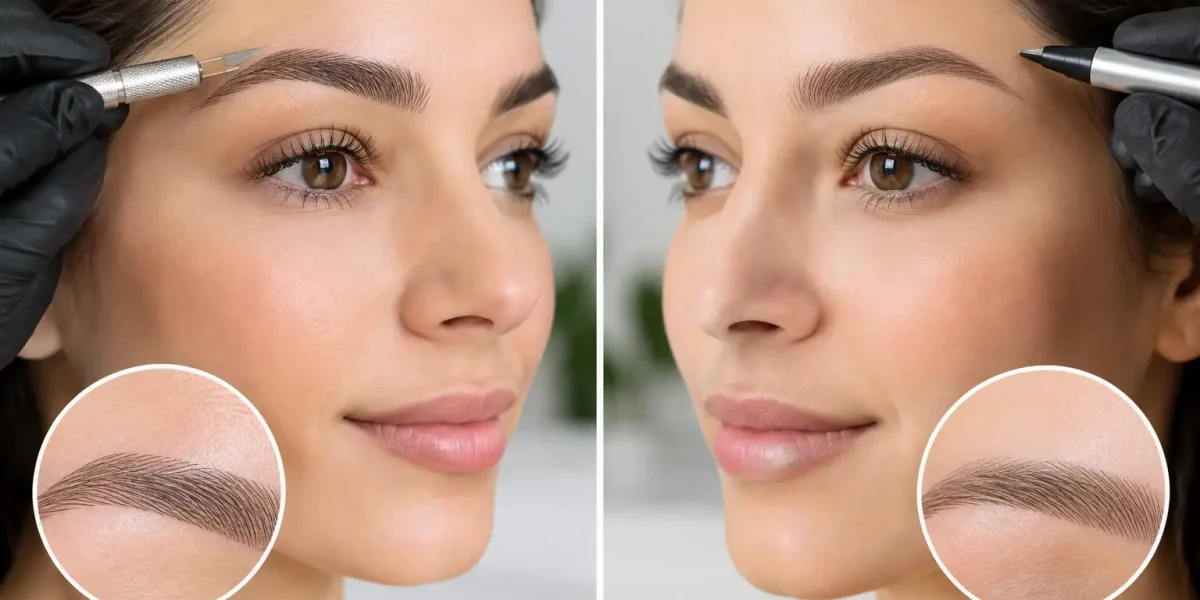
Your eyebrows do more than frame your face. They can soften a strong expression, restore balance after hair loss or overplucking, and save precious time every morning. That is why the choice between microblading versus nanobrows deserves more than a quick glance at before-and-after photos. Both can create realistic, fuller-looking brows, but they use different tools, heal differently, and may suit very different skin types.
The best treatment is not automatically the one with the finest-looking hair strokes online. It is the technique that respects your skin, your natural brow pattern, and the level of definition you want to see long after healing.
Microblading versus nanobrows: the core difference
Microblading is a manual permanent makeup technique. A trained artist uses a small hand tool with tiny needles arranged in a blade shape to make fine, hair-like incisions in the skin. Pigment is placed into those strokes to mimic individual brow hairs.
Nanobrows, often called nano hairstrokes or machine hairstrokes, are created with a digital permanent makeup machine and an ultra-fine single needle. Instead of making manual cuts, the needle implants pigment with controlled movement and speed. The finished result can still look like natural hair strokes, but the method behind those strokes is very different.
That difference matters. Microblading depends heavily on how the skin accepts manual strokes. Nanobrows give an experienced artist more flexibility to adjust depth, pressure, and pigment placement as they work. For many clients, particularly those with mature, oily, textured, or sensitive skin, that precision can lead to cleaner healed results.
Neither service should look like a stamped-on brow. The goal is customized enhancement – a shape and density that make your face look more polished while still looking like you.
Why skin type can decide the better technique
A beautiful fresh result is only part of the story. Permanent makeup must heal inside living skin, and every skin type behaves differently.
Microblading often performs best on normal to dry skin with small pores and minimal texture. On this skin type, crisp manual strokes may heal with a soft, realistic finish. However, even ideal candidates need to understand that strokes can soften as pigment settles during healing.
Oily skin can be more challenging for microblading. Natural oil production may cause strokes to blur, expand, or fade more quickly. Large pores and active acne in the brow area can create the same issue. This does not mean oily-skinned clients cannot have fuller brows. It means a machine technique, shaded brow, or combination approach may provide a more reliable long-term result.
Nanobrows are often a strong option for clients whose skin needs more controlled pigment delivery. They can also be especially valuable for mature skin, where the skin may be thinner, looser, or less predictable. A skilled artist will not force sharp hairstrokes onto skin that cannot support them. That is not artistry. It is a shortcut that can compromise the healed result.
A consultation should include an honest assessment of your skin, pores, previous tattooing, medications, and lifestyle. The right recommendation is personal, not a one-size-fits-all trend.
The look: soft realism or polished definition?
Both microblading and nanobrows can create a natural effect, but the final look depends on design as much as technique. Your bone structure, brow growth, facial symmetry, skin undertone, and daily makeup habits all influence the plan.
Microblading is known for its airy, feathered appearance. It can be ideal for someone with sparse areas who wants the impression of extra natural hair without the look of makeup. When performed on suitable skin, it can create a delicate enhancement that is easy to wear.
Nanobrows can also be exceptionally soft, but they offer more versatility. The artist may create subtle strokes through the front of the brow and build density through the arch and tail, where many clients have the least natural hair. This can deliver a refined, fuller brow without making it look heavy.
If you fill in your brows every day with pencil or powder, you may prefer a combination brow. This approach pairs hairstrokes with gentle shading, giving the brow both realistic texture and more consistent fullness. It can be a smarter choice than trying to achieve every desired detail with strokes alone.
The most flattering brow is rarely the darkest, boldest, or most dramatic option. It is the one that brings harmony to your face and still feels right when you wake up without makeup.
Healing, discomfort, and downtime
Permanent makeup is a skin service, so healing is part of the investment. A topical numbing product is commonly used to keep the procedure manageable. Most clients describe the feeling as scratching, light pressure, or mild discomfort rather than severe pain. Sensitivity varies, especially around the menstrual cycle, so a reputable provider will discuss what to expect before your appointment.
After microblading, the brow area may appear darker, warmer, and more defined at first. Light flaking is normal as the skin heals. Because microblading creates manual incisions, proper aftercare is essential to support clean healing and pigment retention.
Nanobrows also heal with temporary darkness and flaking, but many clients find the process feels gentler because the skin is not being manually sliced. That said, no permanent makeup treatment is completely without recovery. Expect a healing period of roughly seven to 14 days on the surface, while the pigment continues settling beneath the skin for several more weeks.
During aftercare, clients are generally asked to avoid picking, heavy sweating, swimming, direct sun exposure, and applying unapproved products to the brow area. Following aftercare instructions protects your investment far better than trying to speed up the process.
Longevity is not the same as permanence
Microblading and nanobrows are forms of cosmetic tattooing, but they are designed to fade gradually rather than remain unchanged forever. Most clients need a perfecting session after their initial appointment because skin does not retain pigment identically in every area.
How long results last depends on skin type, pigment color, sun exposure, skincare ingredients, immune response, and the depth and technique used. In general, clients may schedule color refreshes every one to three years. Oily skin, frequent exfoliation, retinol use near the brows, chemical peels, and intense sun exposure can make fading happen faster.
Microblading may need more frequent maintenance for some clients, particularly those with oilier skin. Nanobrows can offer stronger retention in suitable candidates, but they are not a promise of permanent crispness. Any artist who guarantees an exact duration without seeing your skin is overselling the service.
Choose a provider who discusses healed results, not only immediate results. Fresh brows are exciting, but healed brows reveal the quality of the technique, pigment choice, and customized plan.
Who should pause before booking?
A qualified permanent makeup professional should review your health history and determine whether treatment is appropriate. Pregnancy or nursing, certain blood-thinning medications, active skin infections, recent brow-area procedures, uncontrolled diabetes, and a history of keloid scarring may require postponing treatment or obtaining medical clearance.
Previous brow tattooing also deserves special attention. Covering old pigment is not always possible with new hairstrokes. If the existing color has shifted, the shape is too saturated, or the tattoo sits outside a flattering design, removal or lightening may be the better first step. Adding more pigment to an unsuitable canvas can create a result that is harder to correct later.
This is where experience matters. Brows are central to the face, and permanent makeup should never be treated as an impulse appointment.
How to choose with confidence
When comparing microblading versus nanobrows, start with your skin rather than a trend. Bring reference photos, but stay open to the technique that will heal best for you. Ask to see healed work on clients with skin similar to yours, not just freshly completed brows under perfect lighting.
You should also ask how the artist chooses shape, whether a touch-up is included or recommended, what pigments are used, and how they handle previous permanent makeup. A detailed consultation is a sign that your result is being designed, not rushed.
At Isa Skincare, the focus is on enhancement that supports your natural beauty and your confidence. The right brow treatment should make your reflection feel more balanced, more awake, and unmistakably yours.
Your next step is simple: choose an artist who is willing to tell you when microblading is right, when nanobrows are the stronger option, and when another approach will give you the most beautiful healed result.