
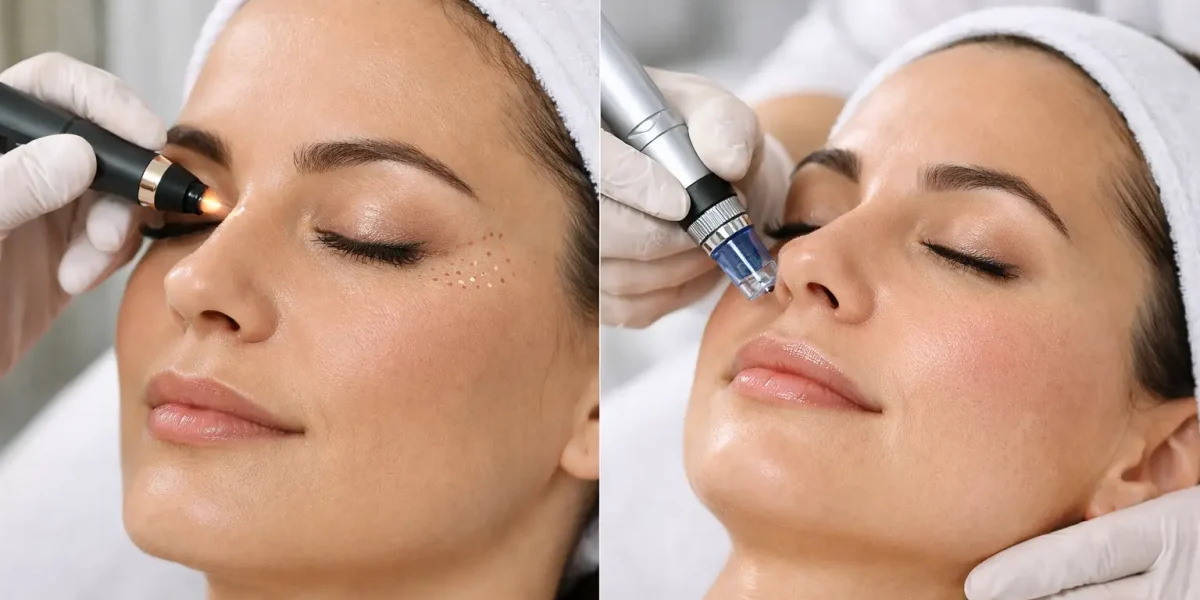
If you are choosing between plasma lift vs microneedling, you are probably not looking for another vague promise. You want to know what will actually tighten skin, soften lines, improve texture, and give you visible change without wasting time or money. These treatments are not interchangeable, and the right choice depends on what you want to correct.
Some clients come in focused on crepey eyelids, lip lines, or loose skin around the mouth. Others are more concerned with acne scars, enlarged pores, or overall texture. That distinction matters, because plasma lift and microneedling work through different mechanisms and deliver different kinds of results.
Plasma lift vs microneedling: the core difference
Plasma lift is a skin-tightening treatment that uses plasma energy on the skin’s surface to create controlled micro-injuries. That process stimulates collagen and elastin while encouraging the skin to contract as it heals. The result is not just smoother skin, but a lifting effect in areas where laxity is the real issue.
Microneedling works by creating tiny punctures in the skin with fine needles. Those channels trigger a wound-healing response and collagen production deeper in the skin. Microneedling is often chosen to improve tone, texture, superficial lines, mild scarring, and pore appearance.
So when people ask which treatment is better, the honest answer is simple. Plasma lift is usually the stronger option for tightening loose or crepey skin. Microneedling is often better for texture refinement and broad skin rejuvenation when lifting is not the main goal.
Who gets the best results from plasma lift?
Plasma lift is especially appealing for women who want a non-surgical option that does more than polish the skin. It is often used around the eyes, mouth, neck, and other areas where the skin has started to thin, fold, or lose definition. If you are seeing hooded upper lids, fine accordion lines above the lips, or a softening jawline, this is where plasma-based tightening stands out.
The reason is mechanical as much as biological. Plasma treatment creates a visible tightening effect as the skin heals, and then collagen continues to rebuild over the following weeks and months. Many clients notice an immediate improvement, but the more meaningful change develops progressively.
This is why plasma lift tends to attract clients who want visible correction without injections or surgery. It is not just about making skin look fresher. It is about helping skin look firmer and more defined.
When microneedling makes more sense
Microneedling is a strong choice when your skin concern is more about quality than sagging. If your skin feels rough, dull, uneven, or marked by acne scars and enlarged pores, microneedling can be a smart and effective path. It is also a common starting point for clients who want collagen stimulation with less visible downtime than plasma treatments in delicate areas.
For younger clients or those with early signs of aging, microneedling can help maintain firmness and support healthier skin over time. It can also be easier to use over larger treatment zones, such as the cheeks or full face, when the goal is overall rejuvenation rather than targeted lifting.
That said, microneedling has limits. If loose skin is the issue, it may improve the look of the area but not deliver the same tightening effect many clients expect. This is where disappointment can happen – not because the treatment failed, but because it was chosen for the wrong reason.
Results: tightening vs resurfacing
This is where plasma lift vs microneedling becomes much clearer.
Plasma lift is typically the stronger contender for skin contraction and lifting. It is often chosen for upper eyelids, under-eye wrinkling, smoker’s lines, crow’s feet, and small areas that need real tightening. The changes can be dramatic when the treatment is performed well and matched to the right candidate.
Microneedling shines when the goal is smoother texture, more even tone, softened acne scarring, and a fresher overall surface. It can absolutely improve fine lines, but the effect is usually more about renewal than lift.
Think of it this way. If your skin needs structure, plasma lift is often the better conversation. If your skin needs refinement, microneedling may be enough.
Downtime, healing, and what to expect
Downtime is one of the biggest deciding factors for clients, and here the difference is hard to ignore.
Plasma lift usually comes with more visible healing. Small carbon crusts form where the plasma touches the skin, and swelling is common, especially around the eyes. Those tiny dots are part of the normal healing process and usually remain for several days before shedding naturally. The treated area can look intense at first, even when healing is going exactly as planned.
Microneedling generally has a milder recovery. Most clients experience redness, sensitivity, and a sunburn-like look for a day or two. Depending on depth and technique, there may be some dryness or flaking afterward, but it is often easier to fit into a busy schedule.
This does not make microneedling better. It simply makes it easier for clients who want less visible downtime. If your priority is maximum tightening, a few days of healing may be a trade many women are willing to make.
Pain level and comfort
Neither treatment is usually described as effortless, but both are very manageable when performed professionally. Topical numbing is commonly used.
Plasma lift can feel sharper and more intense because it works on the skin surface and often targets delicate zones. Microneedling tends to feel more like vibration with pricking or scratching, depending on the depth and the area treated.
Pain tolerance varies, but most clients are less concerned about the sensation than they are about whether the treatment is worth it. That is the better question. A treatment should match the result you want, not just the comfort level you prefer in the moment.
Safety and candidate selection matter
The best treatment on paper can still be the wrong treatment for your skin. This is especially true with advanced aesthetic procedures.
Plasma lift requires careful assessment of skin type, healing history, and the area being treated. Technique matters. Over-treatment or poor placement can affect healing and final results. Microneedling also requires skill, especially when treating active acne, sensitive skin, or deeper scarring.
This is why experience matters more than trends. A seasoned provider is not just performing a procedure. She is reading your skin, understanding your goals, and knowing when to recommend one treatment over another.
Can you combine plasma lift and microneedling?
In some cases, yes – but not casually and not at the same time unless your provider has a specific plan. These treatments can complement each other when used strategically.
For example, a client might choose plasma lift for targeted tightening around the eyes or mouth, then later use microneedling to improve overall texture and support collagen across the rest of the face. That approach can make sense because each treatment is doing a different job.
At Isa Skincare, this kind of decision is based on what creates the most visible and lasting improvement, not what sounds trendy. More treatment is not always better. Better treatment planning is.
Which one should you choose?
If your main concern is loose eyelids, wrinkled skin around the mouth, or localized laxity, plasma lift is usually the stronger option. It was designed for the client who wants a visible lift without surgery and is willing to accept a more noticeable healing period to get there.
If your concerns are acne scars, enlarged pores, dullness, or uneven texture, microneedling may be the better fit. It is effective, versatile, and often easier to recover from.
If you want both tighter skin and better texture, you may need a customized plan rather than a one-size-fits-all answer. That is often the smartest route, because skin aging rarely shows up in just one way.
The right treatment is the one that respects your anatomy, your timeline, and the result you actually want to see in the mirror. Choose the procedure for your real concern, not the one with the loudest marketing, and your skin will thank you for it.