
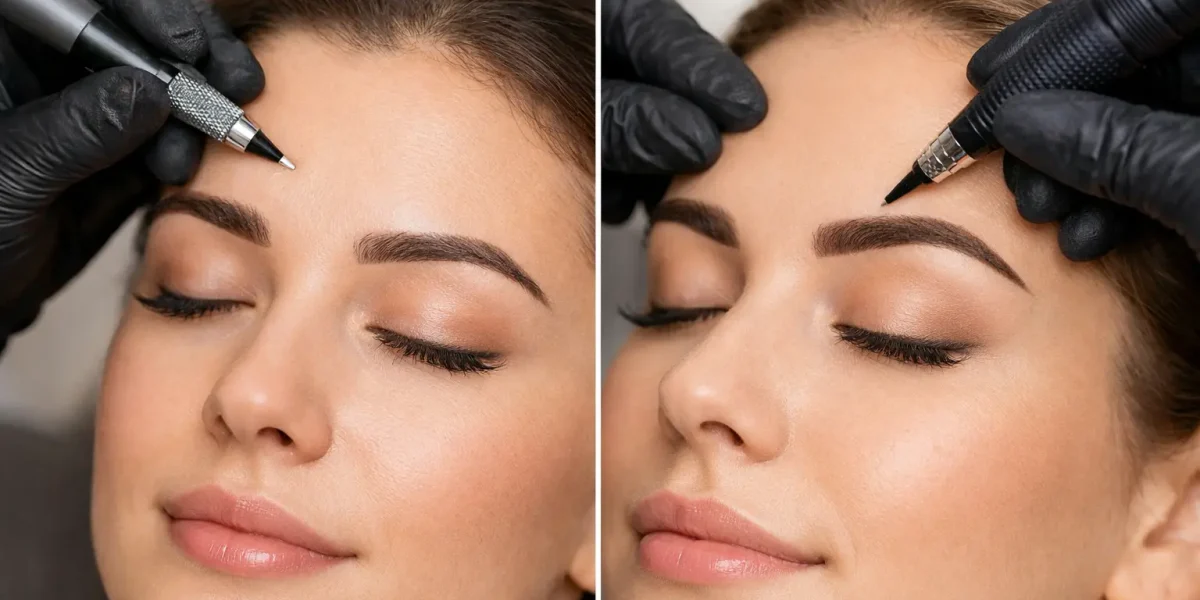
Some brow appointments change your face in the best way. Others leave you realizing you picked the wrong technique for your skin, your style, or your daily routine. When clients ask about microblading vs powder brows, they usually want one simple answer. The truth is better than simple – the right choice depends on how you want your brows to look at 7 a.m., how your skin behaves, and how much softness or definition you want to wake up with.
Both treatments fall under the permanent makeup umbrella, but they create very different results. Microblading uses a manual tool to create fine, hair-like strokes that mimic natural brow hairs. Powder brows use a machine technique to deposit pigment in a soft, shaded pattern, creating the look of brow pencil or powder. One is more stroke-focused. The other is more pixelated and diffused. Neither is automatically better. The best option is the one that performs beautifully on your skin over time.
Microblading vs Powder Brows: The core difference
Microblading is all about imitation. It tries to recreate the appearance of individual hairs, especially for clients who want a natural, barely-there enhancement. If your goal is to fill sparse areas without looking obviously “done,” microblading can be very appealing. From a distance, well-executed strokes can look delicate and realistic.
Powder brows are about shape, structure, and soft fullness. Instead of cutting crisp strokes into the skin, the artist uses a cosmetic tattoo machine to build color gradually. The result can be airy and soft or more defined, depending on your preference. Think polished rather than drawn on. It gives the brow a finished look without relying on visible hair strokes.
That difference matters because brows do not live in a perfect studio light forever. They heal, they fade, and they interact with oil production, sun exposure, skincare products, and time. A treatment that looks stunning on day one should still make sense six months and two years later.
Which brow technique looks more natural?
This is where a lot of people get tripped up, because “natural” means different things to different clients. If natural to you means realistic hair detail, microblading often wins the first impression. The fine strokes can blend beautifully into existing brow hair, especially on drier skin with small pores and good density.
If natural to you means softly filled, balanced, and effortlessly groomed, powder brows often look more believable in real life. A well-done powder brow does not have to look heavy. In fact, the modern version is usually softer than people expect. It can create a misty, elegant finish that reads youthful and polished instead of harsh.
This is also where professional design matters more than the name of the service. An overbuilt microblading set can look artificial. A beautifully tailored powder brow can look incredibly soft. Technique matters, but so does restraint.
Skin type changes everything
If you have oily skin, powder brows are usually the more reliable choice. Oily skin tends to blur microbladed strokes as they heal, which can make those crisp hair-like lines expand or lose definition over time. Large pores can create a similar issue. The result may still be attractive, but it may not stay as clean and stroke-like as you expected.
Dry to normal skin tends to hold microblading better. The strokes often heal with more clarity, and the overall effect can remain finer. Even then, aftercare and lifestyle still play a role. Frequent exfoliation, active skincare, heavy sun exposure, and sweating can all affect retention.
Mature skin also deserves a more thoughtful conversation. Many clients assume microblading is always the most natural option, but on thinner or more textured skin, powder brows can actually age better. The soft shading can be gentler visually and may create a smoother long-term result than repeated etched strokes.
Sensitive or reactive skin may also do better with one method over the other, depending on the artist’s approach and your medical history. This is why a real consultation matters. A strong brow result starts with skin analysis, not trend-chasing.
Pain, healing, and downtime
Most clients want honesty here, so here it is: neither treatment is usually described as unbearable, but neither is completely sensation-free. Numbing is typically used, and pain tolerance varies from person to person.
Microblading can feel scratchy because the tool creates small incisions in the skin. Powder brows often feel more like vibration and repeated surface work. Some clients find powder brows easier to tolerate. Others do not notice much difference. The bigger issue is often healing, not discomfort during the appointment.
Microblading healing can involve flaking, patchiness, and temporary fading before the color settles. Powder brows also go through a healing cycle, but many clients feel the process is more predictable. Because the method is less about carving visible strokes and more about layering pigment, the healed result can appear more even.
Downtime is still relatively low for both compared with more invasive beauty procedures. You will need to protect the area, avoid picking, and follow aftercare carefully. If you want long-lasting cosmetic improvement, healing discipline matters.
Longevity and maintenance
If your main priority is longevity, powder brows often come out ahead. The machine shading technique tends to hold better over time on a wider range of skin types. It usually fades more evenly as well, which makes refresh appointments easier to plan.
Microblading can fade beautifully when done correctly, but it may require more frequent touch-ups, especially on oily skin or clients whose lifestyle speeds up pigment loss. It is not just about how long the pigment stays visible. It is also about how clearly the original pattern remains as it softens.
That trade-off is worth understanding before you book. Some clients love the initial detail of microblading enough to accept more upkeep. Others would rather choose a technique that gives them a soft, fuller brow for longer with less risk of blurring.
Style goals: soft, defined, or makeup-ready?
If you rarely wear brow makeup and just want a little more shape where hair is missing, microblading may feel like the gentler upgrade. It can enhance what is already there instead of creating the appearance of a fully styled brow.
If you are used to filling in your brows daily, powder brows may feel like freedom. They can replace that soft pencil or powder effect and give you a more finished frame around the eyes. For women who want to look put together from the moment they wake up, this is often the more satisfying result.
There is also a middle ground. Many advanced artists combine both methods in a hybrid approach, using strokes in strategic areas and shading for depth. This can work beautifully for the right candidate, although it still depends on skin type and brow goals. More technique does not always mean better. It means more customization when it is truly needed.
Microblading vs powder brows for mature beauty
For clients focused on timeless beauty, not just trend-driven brows, powder brows often make a strong case. Soft shading can add definition without depending on ultra-fine stroke detail that may soften unpredictably over time. It can also create better symmetry, which is one of the biggest reasons brow treatments make such a visible impact on the whole face.
Microblading still has a place, especially when there is enough natural hair to support the illusion. But if your brows have thinned significantly, your skin is more delicate, or you want a cleaner long-term finish, powder may simply wear better.
That is the real standard – not what looks most dramatic on social media, but what will continue to flatter your features as it heals and fades.
So which one should you choose?
Choose microblading if you have drier skin, relatively good natural brow hair, and you want realistic hair strokes more than a makeup effect. Choose powder brows if you have oily or mature skin, want longer-lasting softness, or prefer a fuller, more polished brow from morning to night.
If you are torn, that usually means you need a provider who is honest enough to recommend the technique your skin can actually hold – not just the service you came in asking for. At Isa Skincare, that level of decision-making matters because beautiful permanent makeup should do more than look good on appointment day. It should heal well, age well, and support your confidence without constant correction.
The best brows are not the trendiest ones. They are the ones that still make you feel polished, balanced, and unmistakably yourself when the healing is over and real life starts.