
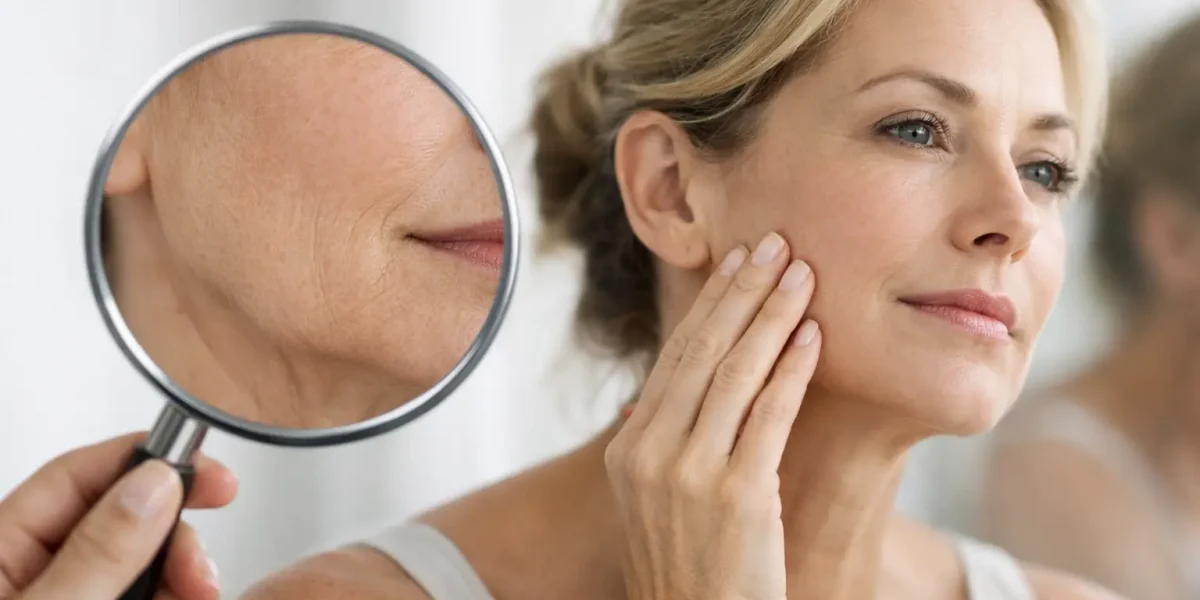
A sharper jawline in photographs, makeup settling differently around the mouth, or skin that no longer seems to “bounce back” after cleansing can be the first signs. Learning how to identify skin laxity early gives you more choice in how you care for your skin and when you seek professional support. It is not about chasing an unrealistic version of youth. It is about recognizing changes in your skin’s structure and choosing treatments that help you look refreshed, defined, and confidently yourself.
What Skin Laxity Actually Means
Skin laxity is the gradual loosening of the skin caused by changes in collagen, elastin, fat distribution, muscle support, and hydration. Collagen gives skin much of its strength. Elastin helps it return to its original position after movement. As these natural support systems decline, the skin may begin to look thinner, less firm, or less well-defined.
This is different from a temporary tired appearance or dehydration. Dehydrated skin can look crepey or dull, but it often improves with hydration and barrier-focused care. True laxity is more structural. You may notice that the skin drapes differently, folds remain after facial expressions stop, or contours that once looked crisp begin to soften.
Age plays a role, but it is not the only factor. Sun exposure, smoking, stress, major weight changes, genetics, hormone shifts, and a history of repeated tanning can all affect how quickly the skin loses firmness. Some women see early signs in their 30s, while others maintain stronger elasticity for much longer. Your skin has its own timeline.
How to Identify Skin Laxity in the Mirror
The most useful assessment is not a single close-up or a harsh bathroom light. Look at your face and neck in natural daylight, both relaxed and in motion. Notice patterns over several weeks rather than judging one day when you are tired, bloated, or dehydrated.
Early laxity often appears as a subtle change in facial definition. The cheeks may seem lower or flatter than they used to, even if your weight has not changed. The jawline can become less distinct, with a softer transition between the chin and neck. Around the mouth, you may notice faint vertical lines, deeper smile folds, or a slight downward pull at the corners of the lips.
The eyes are another area where skin changes can become visible. Upper eyelid skin may begin to rest more heavily over the crease, while the lower eye area can look thinner or lightly creased. On the neck, laxity may show as fine horizontal lines, a less firm under-chin area, or skin that appears more delicate when you turn your head.
A simple observation can help: gently move your face through normal expressions, then relax it. If creases, folds, or a pulled appearance remain longer than before, you may be seeing a reduction in elastic resilience. This does not diagnose the degree of laxity, but it can tell you that your skin’s support is changing.
Signs That Are Easy to Miss
Skin laxity does not always begin with obvious sagging. Many clients first notice that their usual skincare and makeup routine no longer gives the same polished finish. Foundation may gather around the eyes or mouth because fine lines have become more pronounced. Blush placement that once lifted the face may suddenly emphasize lower cheek fullness instead.
Photographs can reveal change, especially when you compare images taken in similar lighting over time. Look at the outer cheek, jawline, under-chin area, eyelids, and neck. Avoid comparing yourself to filtered social media images. The goal is to understand your own facial architecture, not to find flaws that were never there.
The Pinch Test: Useful, but Not the Whole Story
You may have heard that you can test laxity by gently pinching the skin and watching how fast it returns. This can provide a small clue about elasticity, particularly on the cheek, neck, or back of the hand. If the skin feels thin, creases easily, or returns more slowly than it once did, there may be reduced elastic support.
Still, the pinch test has limits. Hydration, skin thickness, recent product use, and the amount of pressure you apply can all change the result. It also cannot show what is happening in deeper tissue, where facial volume and structural support affect the way skin sits on the face. Think of it as one observation, not a final answer.
Laxity, Wrinkles, and Volume Loss Are Not the Same
These concerns often appear together, but they require different thinking. Wrinkles are lines created by repeated movement, sun exposure, and changes in skin quality. Volume loss occurs when fat pads and supportive tissue diminish or shift, which can create hollows in the temples, under-eyes, or cheeks. Laxity is the looseness or reduced firmness of the skin itself.
For example, someone may have fine lines around the mouth without significant sagging. Another person may have smooth skin but notice a heavier lower face because volume has shifted downward. Many women have a combination of all three. That is why one-size-fits-all treatments rarely create the most natural-looking result.
A professional assessment looks beyond the line or fold you want to correct. It considers skin thickness, degree of laxity, facial proportions, asymmetry, and your goals. The right plan should enhance your natural beauty, not create an overdone or unfamiliar appearance.
When Skin Laxity May Benefit From Professional Treatment
At-home skincare supports healthy-looking skin, but creams cannot fully tighten skin that has lost deeper structural support. Quality ingredients, daily sunscreen, consistent hydration, and a healthy lifestyle can help protect what you have. They are valuable maintenance tools, especially when used early.
When laxity becomes visible in the cheeks, jawline, eyelids, neck, or around the mouth, professional skin-tightening options may offer a more meaningful change. The best timing is often earlier than people expect. Treating mild to moderate laxity can help preserve definition before folds and sagging become more advanced.
For clients who want visible improvement without traditional surgery, plasma-based skin tightening may be considered after an individualized consultation. Isa Skincare’s Avatar Skin Lift Therapy is designed to support collagen stimulation and address areas of looseness, fine lines, wrinkles, and asymmetry with a soft-surgery approach. Results and suitability vary by skin condition, treatment area, healing response, and the level of correction desired.
This is where honesty matters. Non-surgical treatments can be an excellent option for the right candidate, but they do not replace surgery for every degree of laxity. More advanced skin excess, substantial neck laxity, or significant tissue descent may require a different level of intervention. A qualified provider should be clear about what is realistic for your skin, your lifestyle, and your desired outcome.
What to Do Once You Notice a Change
Start by taking clear, makeup-free photographs in natural light from the front and both sides. Repeat them every few months rather than checking every day. This gives you a more accurate picture of progression and makes it easier to explain what you are seeing during a consultation.
Protect your skin daily with broad-spectrum sunscreen, especially on the face, neck, chest, and hands. Avoid aggressive routines that leave your skin irritated or compromised. If you have recently lost weight, experienced hormonal changes, or begun noticing rapid thinning or unusual texture changes, mention that during your assessment. Your skin history matters as much as what is visible today.
Most of all, do not wait until you feel disconnected from your reflection. Subtle changes deserve thoughtful attention. A personalized consultation can clarify whether you are seeing dehydration, wrinkles, volume changes, true laxity, or a combination of concerns – and help you choose a path that respects your features while restoring a firmer, more lifted appearance.