
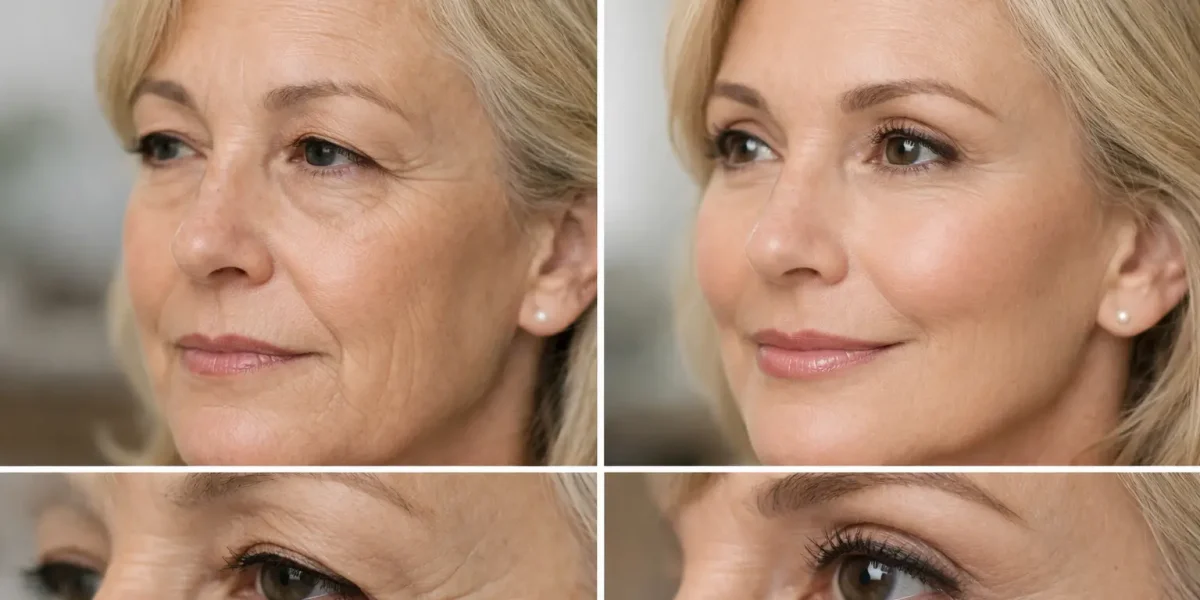
A good eyelid result is not just about looking more awake in a photo. It is about what changed, how much changed, and whether the eye still looks like you. That is why eyelid lift before after examples matter so much. They help you spot the difference between a subtle refresh and an overdone result, especially if you are comparing non-surgical options to traditional surgery.
For many women, the concern starts small. Makeup transfers onto the upper lid. Eyeliner disappears into a fold. One eye begins to look heavier than the other. Then the issue becomes more visible in pictures, on video calls, and in everyday expressions. The right eyelid lift treatment can improve that heaviness, but only if you understand what realistic improvement actually looks like.
What eyelid lift before after examples really show
The best before and after examples do not rely on dramatic lighting or a lifted brow pose. They show the eye area at rest, from a similar angle, with the same expression. When those basics are consistent, you can see the details that matter.
Start with upper lid hooding. In a true improvement, the fold looks reduced and the mobile lid becomes more visible. That does not always mean a wide-open eye. In many of the most attractive results, the change is refined. The eyelid appears smoother, less creased, and less heavy without looking tight or surprised.
You should also pay attention to asymmetry. Many clients do not have identical eyelids to begin with. One brow sits higher, one lid folds more deeply, or one eye has more skin laxity. Strong eyelid lift before after examples show whether the treatment improved balance, not whether it created total perfection. Perfect symmetry is rarely realistic, and chasing it can lead to disappointment.
The most common changes seen in before and afters
A successful eyelid lift usually improves several small features at once. The first is reduced skin laxity across the upper lid. The second is a cleaner eyelid contour, especially where the fold used to sit heavily over the lash line. The third is a brighter overall eye appearance, which often makes the face look more rested even when the change itself is not extreme.
In some examples, the biggest difference is not the lid itself but how the eyes work with the rest of the face afterward. Brows can appear better framed. Eye makeup becomes easier to apply. Fine lines around the outer eye may look softer because the skin is less creased and compacted.
That said, not every concern is solved by an eyelid lift alone. Deep under-eye hollows, significant brow descent, and fat pads under the eyes may require a different approach. This is where experience matters. A strong provider does not treat every eye concern as the same problem.
Mild hooding versus advanced laxity
Before and after examples look very different depending on starting point. Mild hooding often responds with a polished, fresh result. You may see more lid space, smoother skin, and better symmetry, but the change can be subtle in photos. In person, it often reads as youthful and clean rather than obvious.
With more advanced laxity, the result may be more dramatic, but there are limits. If the skin is very heavy or the tissue sits deeply over the lashes, a non-surgical lift can improve the appearance significantly, but not always to the same degree as surgical removal of excess skin. That is not a weakness. It is simply the difference between tissue tightening and tissue excision.
What makes a non-surgical eyelid result look impressive
This is where many people get confused. They expect the most impressive result to be the most dramatic one. In reality, the strongest non-surgical results are usually the ones that preserve natural eye shape while correcting visible heaviness.
With plasma-based skin tightening methods, the goal is controlled contraction and collagen stimulation. That means you may see an immediate tightening effect, followed by progressive improvement as healing continues and collagen remodeling develops over the following weeks and months. This can be especially appealing for women who want visible change without injections, cutting, or a long recovery.
A treatment like Avatar Skin Lift Therapy is designed around that middle ground. It gives clients a soft-surgery option for tightening delicate eyelid skin and improving laxity while avoiding the scars and downtime many associate with surgery. For the right candidate, that is exactly why before and after examples are so persuasive. They show that meaningful change does not always require the most aggressive route.
Immediate results versus final results
One of the most important things to understand when reviewing examples is timing. Some after photos are taken very early, once swelling has settled enough to reveal initial lift. Others are taken weeks or months later, when collagen has had time to build and the skin has matured into the result.
Early photos can be exciting because they show fast visible improvement. Later photos are often more valuable because they reveal whether the result held, softened naturally, and remained balanced. If you are evaluating a provider’s work, ask yourself whether the examples show a full healing timeline or just the most flattering moment.
How to read eyelid before and after photos like an expert
Do not just glance at the eye and decide whether it looks better. Slow down and compare specific markers. Look at how much upper lid space is visible. Notice whether the fold sits higher or simply looks less heavy. Check whether the lashes are more exposed or whether the skin still crowds them.
Then look beyond the lid. Did the brow position change between photos? If the client is raising her forehead in the after image, the result may look stronger than it really is. Are both photos taken with the eyes equally open? Was concealer or eye makeup used in one image but not the other? Small presentation choices can exaggerate results.
Good examples are honest examples. They do not need tricks. When a treatment works, the contour change speaks for itself.
Who usually gets the best before and after outcome
The best candidates often have mild to moderate upper eyelid laxity, crepey skin, or visible hooding without extreme tissue excess. They want a fresher eye area, but they do not want surgery, stitches, or an extended social downtime. They are also realistic. They understand that non-surgical lifting improves, tightens, and refines. It does not erase every age-related change overnight.
Skin quality matters too. Clients with decent elasticity and good healing capacity often respond beautifully. Lifestyle matters as well. Smoking, poor aftercare, and constant sun exposure can affect healing and the quality of the final result.
If you have significant sagging, heavy brows, or medical issues affecting the eyelids, your ideal treatment plan may be different. This is one of those cases where confidence should come from a precise consultation, not from wishful thinking based on someone else’s photos.
Why some examples look better than others
Technique is a major factor. So is restraint. The eyelid is one of the most unforgiving areas on the face. Too little treatment leaves heaviness behind. Too much can create an overly dry, tight, or unnatural look during healing. Experienced work is about control, placement, and a clear understanding of the eye’s natural anatomy.
Device quality and treatment design also affect results. Not every tightening method produces the same level of precision on delicate eyelid skin. A provider with deep hands-on experience usually knows how to customize intensity, pattern, and spacing based on the client’s lid thickness, asymmetry, and goals.
That is why before and after examples should not just impress you. They should feel consistent. If every result has the same look regardless of starting point, that is a warning sign. Great work respects the face in front of it.
What to expect emotionally after seeing your own after photo
Most clients expect to focus on one thing, like the fold or the hooding. Then they see their after photo and notice something bigger. Their eyes look lighter. Their expression looks less tired. They recognize themselves again, but with less heaviness carrying the whole face down.
That is the real value in eyelid work done well. It is not about chasing a different face. It is about restoring clarity to one of the first areas people notice when they look at you.
If you are reviewing eyelid lift before after examples, look for honesty, balance, and skin quality improvement over empty drama. The best result is the one that makes people notice your eyes, not your procedure.