
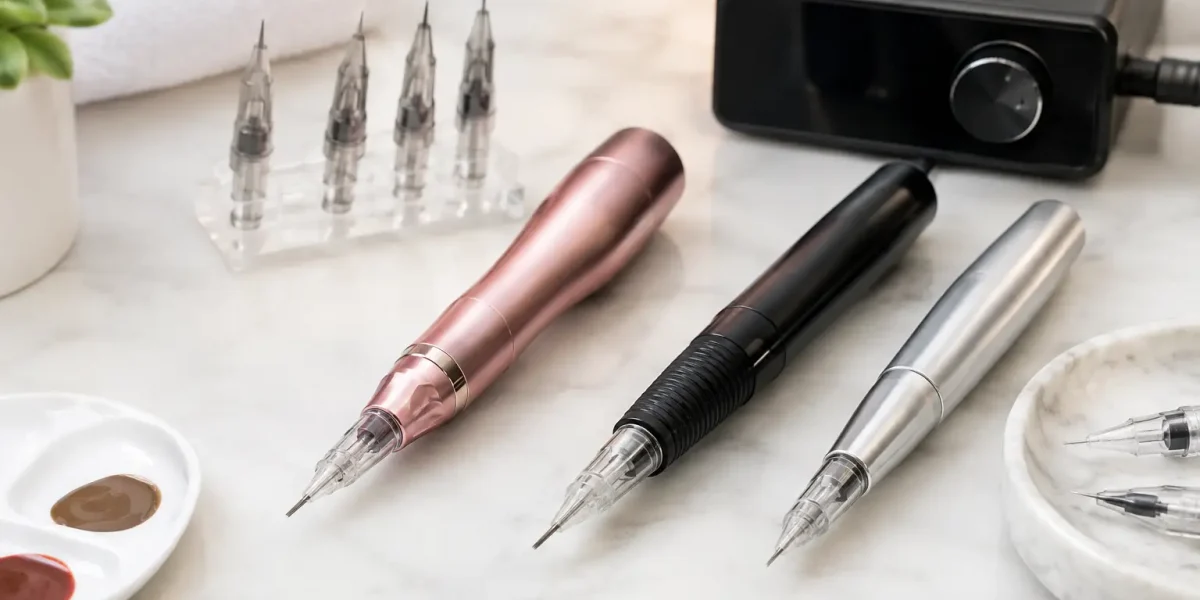
A permanent makeup machine is not just a tool in your hand. It influences pigment retention, client comfort, healing, and the confidence behind every pass. The best permanent makeup machines help an artist create refined brows, clean eyeliner, and softly healed lips without fighting inconsistent power, excess vibration, or an uncomfortable grip.
For clients, the result should look effortless. For professionals, the work behind that result requires deliberate equipment choices. A machine that suits one artist’s technique may feel completely wrong for another, especially when moving between powder brows, hairstrokes, lip blush, and eyeliner. The right choice is never about a flashy label alone. It is about control, reliability, safety, and results that hold their beauty after the healing process.
What Makes the Best Permanent Makeup Machines Different?
A professional-grade PMU machine delivers steady needle movement from the first pass to the last. That consistency matters because facial skin changes from area to area. Brow skin can be dense or mature, lips are delicate and highly vascular, and eyeliner requires exceptional restraint. When power fluctuates or the needle movement is unpredictable, artists may overwork the skin to compensate. That can lead to unnecessary trauma, uneven color, and a more difficult heal.
The best machines balance power with finesse. They should deposit pigment efficiently without forcing the artist to press, stretch, or repeat passes beyond what the skin can tolerate. Low vibration also matters more than many beginners realize. Less vibration supports better hand stability, which is essential for crisp details and symmetrical work.
Comfort belongs in the conversation, too. A lightweight, well-balanced handpiece can reduce fatigue over a full day of appointments. This does not mean the lightest machine is automatically superior. Some artists need a slightly more substantial grip to maintain control. The best fit is the one that allows your natural technique to stay relaxed, intentional, and precise.
Choose a Machine for the Service You Perform Most
There is no single machine that performs every permanent makeup service perfectly for every artist. A versatile pen-style machine can be an excellent foundation for a growing practice, but specialized work may call for different characteristics.
For powder brows and shading, many artists prefer a smooth, controlled machine that can create even saturation without chewing up the skin. The goal is a soft, polished gradient that heals beautifully, not a heavy block of color. A reliable voltage range and stable hand speed make it easier to build those airy layers.
For hairstrokes, precision becomes even more demanding. Artists often look for a machine with minimal vibration, a responsive motor, and a stroke that supports delicate, intentional movement. The skin type, needle configuration, pigment formula, and artist’s pressure all affect the final look. A machine alone cannot guarantee realistic hairstrokes, but it should never make them harder to create.
Lip blush calls for balanced pigment delivery and a handpiece that remains comfortable during detailed border work and gentle shading. The lips require respect. A powerful machine used with too much pressure can create avoidable trauma, while a weak or unstable machine can leave patchy saturation. Eyeliner requires the greatest degree of control. It is often best served by a setup that feels steady, quiet, and highly predictable in small, delicate movements.
Stroke Length, Voltage, and Give
These technical details may sound intimidating, but they directly affect the way a machine feels in the skin. Stroke length refers to how far the needle travels. A shorter stroke often supports softer, more delicate work, while a longer stroke can offer a stronger hit and more efficient pigment placement. Neither is universally better.
A softer setup may be ideal for a gentle artist working on thin, mature, or sensitive skin. A stronger setup can suit certain shading techniques or resistant skin when used correctly. The key is avoiding a machine that encourages aggressive work. Permanent makeup is not about forcing pigment into the skin. It is about placing it at the proper depth with calm, repeatable technique.
Voltage controls the speed and power of the machine. A quality unit should run smoothly across its usable range, not jump, bog down, or feel unreliable at lower settings. Artists should be able to adjust their speed according to the treatment area, needle grouping, pigment, and client skin. If you cannot achieve a stable result without constantly changing settings, the issue may be the machine, the cartridge system, or the technique.
Needle give is another meaningful feature. It describes how much the needle can retract when it meets resistance. Some artists appreciate give because it creates a softer feel and can help prevent excessive pressure. Others prefer a firmer, more direct response. The right option depends on your hand, your training, and the treatments you provide most often.
Cartridge Compatibility and Hygiene Are Non-Negotiable
A beautiful result begins with a clean, professional setup. Choose a machine designed for high-quality, safety-tested cartridges with a reliable membrane system. The membrane helps prevent backflow of pigment and bodily fluids into the handpiece, protecting both your equipment and your sanitation standards.
Do not select cartridges based on price alone. Inconsistent needle quality can create drag, splatter, uneven implantation, and unnecessary skin trauma. Test cartridges for needle sharpness, stability, and how smoothly they release pigment. A dependable cartridge should support your technique, not create surprises halfway through an appointment.
You also need a machine that can be properly barrier-protected and disinfected between clients. Cordless convenience is appealing, especially for mobile setups or clean treatment-room flow, but it does not replace proper infection-control practices. Every artist should follow local regulations, manufacturer instructions, and professional sanitation protocols.
Test Before You Commit
The smartest purchase is rarely made after watching a short video online. If possible, hold the machine, test its balance, and use it on practice material before building your services around it. Pay attention to vibration, noise, grip diameter, battery weight, and how naturally the controls fit into your workflow.
A machine should feel like an extension of your trained hand. If your fingers tighten after a few minutes, if the handpiece feels front-heavy, or if the motor response feels delayed, that discomfort will become more obvious during back-to-back appointments. A lower-priced machine that feels awkward can cost more in corrections, replacements, and lost time than a well-chosen professional model.
Ask practical questions before buying: Is the manufacturer transparent about warranty coverage? Are replacement parts and compatible cartridges readily available? Is there professional education behind the product, or only marketing claims? A reputable supplier should be clear about specifications, maintenance, and support.
Invest for Long-Term Results, Not Just a Low Price
Budget matters, particularly for new artists. Still, permanent makeup equipment is part of the client experience and your professional reputation. An unreliable machine can compromise more than a single appointment. It can affect healed results, touch-up rates, referrals, and the confidence you bring into the treatment room.
That does not mean the most expensive option is always right. Some premium machines include features that may not serve your current technique or treatment menu. Instead, invest in dependable performance, hygienic cartridge compatibility, ergonomic comfort, and service support. Then pair that equipment with advanced education, proper pigment knowledge, and a thoughtful consultation process.
At Isa Skincare, permanent makeup is approached as a precision beauty service, not a rushed transaction. The equipment matters, but mastery comes from understanding facial balance, skin behavior, pigment healing, and the client’s desired outcome.
The machine you choose should make your work calmer, cleaner, and more consistent. Select it with the same care you bring to every face, because the most impressive permanent makeup never announces the tool behind it. It simply leaves the client looking refreshed, defined, and confidently herself.