
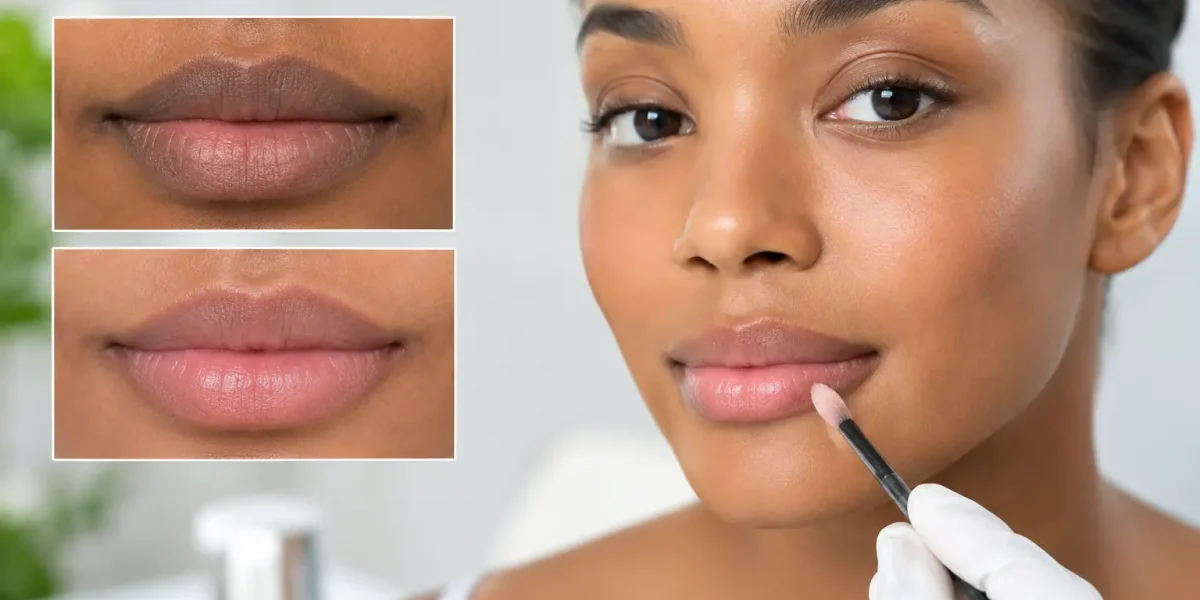
When a favorite nude lipstick turns gray, purple, or uneven across the lips, the issue is often not the lipstick. Natural lip tone can change how every color appears. Understanding how lip neutralization works gives you a clearer picture of what permanent makeup can realistically improve: a more balanced-looking base, softer contrast, and lips that look naturally healthier before any gloss goes on.
Lip neutralization is a specialized permanent makeup treatment designed for lips with deeper brown, purple, cool blue, or uneven undertones. It is not about covering the lips with a single light shade. It is a controlled color-correction process that works with your natural melanin and undertones to create a more even, warmer-looking canvas.
What Lip Neutralization Actually Changes
The goal of lip neutralization is not to erase your natural lip color or make every set of lips pink. It is to reduce the visual dominance of cool or dark undertones so the lips appear more balanced. For many clients, this means their lips look less gray or purple in photographs, their lip line appears more defined, and everyday lip colors show up closer to the shade they are supposed to be.
A skilled artist assesses the lips the way a colorist assesses hair. The visible tone may include brown, mauve, violet, blue, or gray notes, often in different intensities across the top and bottom lip. These undertones affect how implanted pigment heals. Applying a standard rosy lip blush over a cool, dark base can heal dull, muddy, or unexpectedly purple. Neutralization addresses the underlying color first.
This treatment uses warm corrective pigments, commonly in orange, coral, peach, or warm red families. The exact shade is never one-size-fits-all. A color that beautifully balances one client’s lips may be too warm, too light, or too intense for another.
How Lip Neutralization Works in Practice
Every successful result begins with an individualized plan, not a pigment choice pulled from a chart. Your artist evaluates your natural lip tone, the depth of pigmentation, your skin tone, desired result, and whether there is unevenness around the border or within the lips themselves. The aim is to choose a correction shade that can counterbalance the existing undertone without looking artificial once healed.
Correcting Cool and Dark Undertones
Color theory is the foundation of the process. Warm pigments visually counter cool tones. If the lips carry a blue, purple, or gray cast, a warm orange, coral, or red-based modifier may be used to soften that cast. The artist implants the pigment gradually and strategically, building correction rather than trying to force full coverage in one pass.
This is why lip neutralization requires expertise. Dark lips do not all need the same “orange” pigment, and a deeper natural lip tone does not mean a client must leave with bright orange lips. The fresh color can look stronger or warmer immediately after treatment. Once the lips heal, the intention is a softer, more harmonious tone.
Implanting Pigment With a Light, Controlled Technique
During treatment, a permanent makeup device places pigment into the superficial skin of the lips. Most artists use a topical numbing protocol to keep the experience manageable, although sensitivity varies. Some clients feel pressure, vibration, or a scratch-like sensation, especially around the cupid’s bow and lip border.
A light hand and careful saturation matter. Overworking the lips can lead to unnecessary trauma, prolonged swelling, uneven healing, or color that heals less predictably. A thoughtful session is not rushed. Your artist watches how the tissue responds and adjusts the technique as needed.
Healing Reveals the True Direction of the Color
Freshly treated lips can look brighter, warmer, and more defined than the final result. Mild swelling is common and typically settles quickly. Over the next several days, the lips may feel dry and begin to flake. As that surface layer sheds, the color often looks much lighter or seems to disappear temporarily.
This stage can surprise first-time clients. The pigment is settling beneath the healing skin, and the visible color gradually returns over the following weeks. Final healing takes time, usually around six to eight weeks, which is why touch-up appointments are planned after the lips have fully stabilized.
Why More Than One Session Is Often Needed
Lip neutralization is a correction process, not a single-session promise. Most clients need at least two sessions, while lips with significant darkness, cool undertones, or patchy pigmentation may need three or more. Each session builds on the healed result and lets the artist refine the color safely.
The trade-off is patience for a more controlled outcome. Trying to achieve dramatic lightening or intense coverage in one appointment can compromise healing and color retention. Layering the correction allows the lips to respond gradually, which is especially valuable for deeper natural skin and lip tones.
After neutralization is complete, some clients love the soft, naturally enhanced result as it is. Others choose a later lip blush session for a more defined pink, rose, berry, or nude effect. The order matters. Correct first, then add the desired cosmetic tone once the base is balanced.
Who Is a Good Candidate for Lip Neutralization?
This service can be a strong option for clients whose lips appear dark, purple, gray, or uneven and who want a polished look without wearing lipstick every day. It can also help clients who find that nude and light lip products pull ashy or disappear against their natural lip tone.
However, not every type of discoloration should be treated immediately. If lip darkness is new, rapidly changing, raised, painful, or connected to an unexplained medical concern, seek medical evaluation before booking cosmetic tattooing. A permanent makeup artist can improve cosmetic tone, but should not diagnose skin or health conditions.
Clients with active cold sores, cracked lips, infections, open wounds, or significant irritation should wait until the area is fully healed. Anyone with a history of cold sores should speak with a qualified medical provider before treatment, as lip tattooing can trigger an outbreak and preventive medication may be recommended. Pregnancy, breastfeeding, certain medications, recent cosmetic procedures, and compromised healing may also affect timing and eligibility.
Preparation and Aftercare Protect the Result
Healthy, hydrated lips give pigment the best chance to heal evenly. In the days before your appointment, avoid sunburn, lip peeling, aggressive exfoliation, and any product that leaves the lips irritated. Arrive with calm, moisturized lips rather than dry or chapped tissue.
After treatment, follow your artist’s aftercare instructions precisely. This generally means keeping the area clean, using only the recommended healing product, avoiding picking or scrubbing, and limiting heat, sweating, swimming, and direct sun exposure during the early healing period. Skip spicy foods if they sting and avoid sharing drinks or lip products while the skin is healing.
Do not judge the final result during the peeling phase. Healing is part of the treatment, and taking shortcuts with aftercare can affect both color retention and evenness.
How Long Lip Neutralization Lasts
Once fully healed, lip neutralization can last for years, but it is not fixed forever. The color softens gradually with natural skin turnover, sun exposure, lifestyle, skincare habits, and individual metabolism. Some clients choose a color refresh after one to three years, depending on how softly they prefer their lips to fade.
Longevity also depends on the starting point. A client with very dark or cool natural lips may still retain some natural depth after correction. That is not a failed treatment. The most refined results preserve dimension while making the overall tone look more even and intentional.
Choose Expertise Over a Trend
Lip neutralization is one of the most technical forms of permanent makeup because it blends color theory, skin response, healing behavior, and facial aesthetics. Ask to see healed results on clients with lip tones similar to yours, not only fresh appointment photos. A consultation should include a candid discussion about sessions, healing, realistic color goals, and any factors that may affect retention.
At Isa Skincare, every cosmetic enhancement should support your natural beauty, not compete with it. The right neutralization plan does not chase an instant, overly bright transformation. It creates a believable foundation for lips that look balanced, confident, and beautifully yours – even on the days you wear nothing else.