
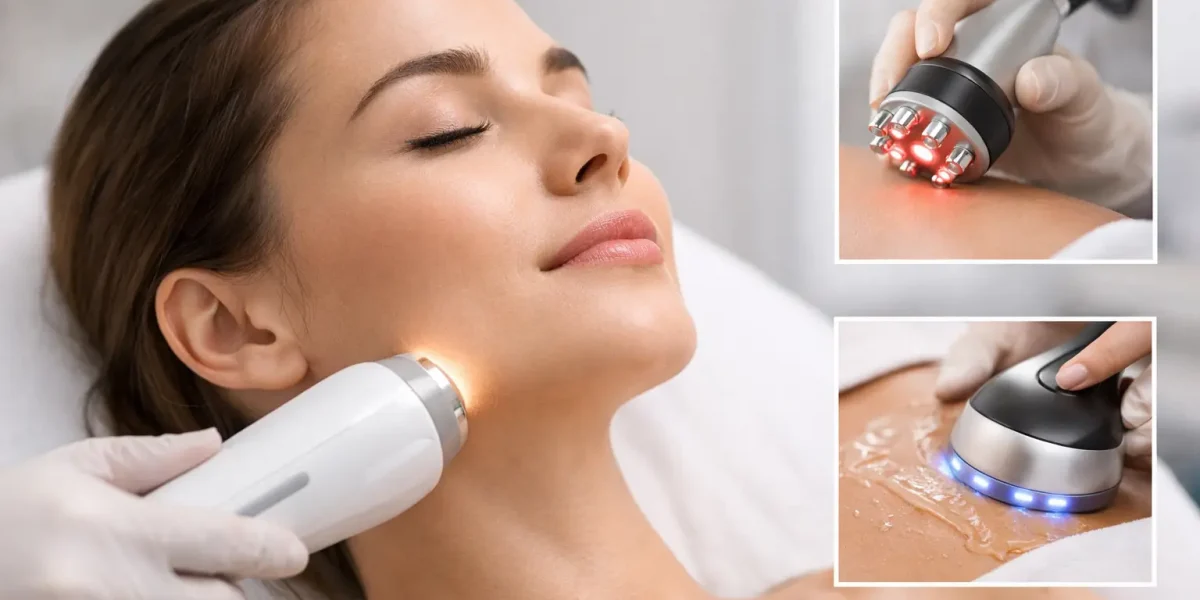
Loose skin rarely shows up all at once. It starts in the jawline, under the eyes, around the mouth, or across the neck – the places where definition matters most. If you are comparing the best noninvasive skin tightening methods, you are probably not looking for hype. You want visible lift, minimal downtime, and results that feel worth your time and money.
That is the right standard. Skin tightening is not one-size-fits-all, and the best treatment depends on how much laxity you have, how quickly you want to see change, and how aggressive you are willing to go without stepping into surgery.
What makes a skin tightening method worth it?
A treatment earns its place by doing more than creating temporary swelling or a short-lived glow. Real tightening works by triggering collagen remodeling, improving skin contraction, or stimulating deeper structures that support the skin over time. The ideal option gives you noticeable improvement without scars, major downtime, or the “done” look many women want to avoid.
The trade-off is simple. The less invasive the treatment, the more results often depend on your starting point, your skin quality, and the provider’s skill. Mild laxity usually responds well. Moderate laxity may need a stronger approach or a series. Significant sagging may still be better suited to surgery.
Best noninvasive skin tightening methods to know
Radiofrequency skin tightening
Radiofrequency, often called RF, is one of the most established options for tightening loose skin without surgery. It uses controlled heat to stimulate collagen in the dermis and sometimes deeper tissue, depending on the device.
This is a strong choice for women who want gradual improvement in the lower face, cheeks, neck, or body with little interruption to daily life. Many RF treatments feel warm rather than painful, and downtime is usually minimal. Skin may look slightly pink for a short time, but most clients return to normal activity quickly.
The catch is that results are often subtle at first and improve over a series of sessions. It is effective, but patience matters. If you want dramatic change after one appointment, RF may feel too slow unless you are using a more advanced platform.
Ultrasound skin tightening
Ultrasound-based tightening targets deeper foundational tissue than many surface-level treatments. It is often used for lifting the brow area, improving jawline definition, and tightening the neck.
The appeal is depth. Ultrasound can stimulate collagen below the skin surface without cutting the skin, which makes it attractive for women who want structural support but are not ready for surgery. Results tend to develop over two to three months and continue improving after that.
The trade-off is comfort and timing. Some patients find it more uncomfortable than expected, and it is not usually the treatment for someone who wants instant visible change. It can be excellent for the right candidate, especially when skin is not severely loose but clearly losing firmness.
Plasma fibroblast and plasma skin lift treatments
Plasma-based tightening has earned attention for good reason. It works by creating controlled micro-trauma at the skin surface, encouraging contraction and collagen renewal. In experienced hands, it can be especially effective around delicate areas such as the eyelids, crow’s feet, lip lines, and parts of the lower face where precision matters.
This category stands out because it can create a more immediate tightening effect than many energy-only treatments, while also supporting continued collagen production over time. For women who want visible improvement without injectables or surgery, plasma can be a compelling middle ground.
It is not downtime-free. Tiny carbon crusts form during healing, and aftercare matters. But for clients willing to manage a short recovery in exchange for stronger visible tightening, plasma often delivers a result that feels more satisfying than treatments marketed as “lunchtime” procedures. Proprietary soft-surgery approaches, including Avatar Skin Lift Therapy, build on this principle by focusing on precise skin contraction, advanced technique, and fast healing.
Microneedling with radiofrequency
RF microneedling combines two proven ideas: controlled micro-injury and heat delivered below the skin surface. This makes it especially useful when laxity comes with texture concerns, enlarged pores, acne scars, or crepey skin.
Instead of treating tightening as a separate issue from skin quality, this method addresses both. It is often used on the face, jawline, neck, and even areas of the body that have early looseness. The skin usually looks red for a few days, and there may be mild swelling, but downtime is still manageable for many women.
Where this treatment shines is mild to moderate laxity paired with visible surface aging. Where it can disappoint is severe sagging. It improves firmness and texture well, but it is not a facelift substitute.
Laser skin tightening
Certain non-ablative and fractional lasers can improve skin firmness by heating tissue and stimulating collagen. They also help with pigment irregularity and texture, which makes them appealing if your concern is not just sagging, but dullness and sun damage too.
Laser is often a smart option for women whose aging pattern is more about thinning, fine lines, and uneven skin tone than heavy jowling. The skin can look fresher and tighter at the same time, which creates a more complete rejuvenation effect.
Still, not every laser is designed primarily for tightening. That is where confusion starts. Some treatments are excellent for resurfacing but only modest for lift. If tightening is your main goal, you want a treatment plan built around laxity first, not just glow.
High-intensity focused electromagnetic or muscle-toning devices
Some newer technologies target the facial muscles or support structures to improve contour and firmness. These treatments do not tighten skin in the same way RF, ultrasound, or plasma do, but they can improve facial definition by stimulating muscle activity and enhancing underlying support.
For the right patient, that can make the jawline look sharper and the face appear more lifted. For the wrong patient, it can be underwhelming because skin laxity itself is not the only issue being treated.
This is a category worth considering as an add-on, not always as your main event. If your skin is loose, you still need a treatment that addresses the skin.
Combination treatment plans
The most effective answer is often not a single device. Combination plans tend to outperform one-off treatments because aging is layered. You may have skin laxity, volume loss, texture change, and asymmetry all at once.
A strategic plan might pair plasma for precision tightening around the eyes or mouth with RF microneedling for texture and firmness, or ultrasound for deeper support followed by surface-focused treatments. This approach usually creates the most balanced, natural-looking result because it treats the face as a whole rather than chasing one line at a time.
How to choose the best noninvasive skin tightening methods for your face
Start with the area that bothers you most. Eyelid laxity, for example, does not respond the same way as a soft jawline or crepey neck. Delicate zones often need more precision, while lower-face sagging may need deeper energy delivery.
Next, be honest about your timeline. If you have an event in two weeks, a treatment with crusting or peeling may not be practical. If you care more about stronger correction than quick social recovery, a treatment with short downtime may be the better investment.
Then look at your tolerance for gradual versus immediate change. Some women are happy building collagen over months. Others want to see enough improvement early on to feel confident they made the right choice. Neither mindset is wrong, but it does affect which treatment will feel successful to you.
Finally, provider skill changes everything. The same technology can produce average results or beautiful ones depending on technique, treatment design, and judgment. Devices matter, but experience matters more.
Who gets the best results?
Women with mild to moderate skin laxity usually see the strongest payoff from noninvasive tightening. If your skin is beginning to soften rather than deeply hanging, you are in the sweet spot. Good skin quality, realistic expectations, and a willingness to follow aftercare also improve results.
If you have advanced sagging, heavy jowls, or a lot of excess skin, noninvasive methods can still help, but they may not give the level of lift you want. In those cases, the smartest consultation is the one that tells the truth. A quality provider should explain what is achievable, what will take multiple sessions, and when surgery may be the more efficient route.
The question to ask before you book
Do not ask only, “What is the newest treatment?” Ask, “What is the best method for my type of laxity, my downtime tolerance, and my end goal?” That is how you avoid spending money on a trendy treatment that was never designed to solve your specific problem.
The best noninvasive skin tightening methods are the ones that match your face, your skin, and your standards. When the treatment is chosen well, the result does not look artificial or overworked. You simply look firmer, fresher, and more like yourself at your strongest.