
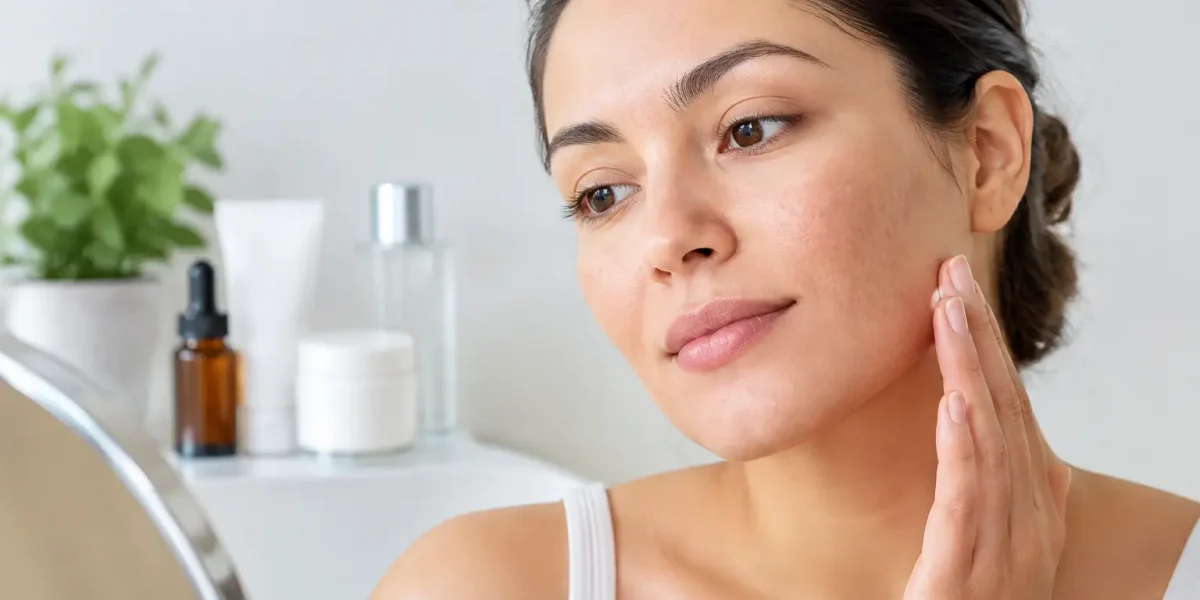
A blemish may disappear in days, but the mark it leaves can stay in the mirror far longer. The best solutions for acne scars are not about chasing one miracle cream. They begin with identifying the type of scar you have, protecting your skin from further damage, and choosing treatments that encourage genuine renewal beneath the surface.
For women who have spent years covering texture with makeup, avoiding harsh lighting, or feeling frustrated by scars that seem unchanged no matter what they try, there is good news: acne scarring can improve. The right approach is personal, strategic, and focused on long-term collagen support rather than quick fixes.
Why acne scars need a personalized approach
Not every post-acne mark is a true scar. Flat red, pink, brown, or purple marks are often leftover discoloration after inflammation. These can fade with time and targeted skincare. A scar, however, is a change in the skin’s structure. It happens when an acne lesion damages collagen during healing, leaving a depression, raised area, or uneven texture.
That distinction matters because discoloration and texture respond to different treatments. A brightening serum may help uneven tone but cannot fill a deep indentation. Likewise, a powerful resurfacing treatment may be unnecessary if your concern is mainly lingering dark marks.
The most common depressed scars are ice pick scars, which are narrow and deep; boxcar scars, which have wider, defined edges; and rolling scars, which create soft-looking waves across the skin. Raised scars and keloids are less common on the face but can appear on the jawline, chest, shoulders, and back. Each needs a different level of care.
The best solutions for acne scars start with skin stability
Before investing in an advanced treatment, get active breakouts under control. Treating acne scars while new inflammation continues can feel like repairing one area while damage is still happening nearby. A dermatologist can help with persistent, painful, cystic, or hormonally driven acne, especially if it is causing new scars.
Daily sunscreen is also non-negotiable. UV exposure can make post-acne discoloration darker and more persistent, while sun-stressed skin may not heal as predictably after professional treatments. Choose a broad-spectrum SPF 30 or higher every morning, even when you are mostly indoors or the weather is overcast.
At home, a simple routine tends to outperform an aggressive one. Gentle cleansing, moisturizer that supports the skin barrier, sunscreen, and a carefully selected active ingredient are enough for many people. Over-scrubbing, picking, and rotating multiple acids in the same week can create irritation that makes marks look worse.
For discoloration, ingredients such as vitamin C, niacinamide, azelaic acid, retinoids, and carefully used exfoliating acids may help improve tone over time. Retinoids can also support collagen turnover, making them useful for very mild texture changes. Results are gradual, and sensitive skin needs a slower introduction. If you are pregnant, breastfeeding, or managing a skin condition, ask a qualified medical professional before using retinoids or strong actives.
Professional treatments that improve texture
When scars are indented or clearly visible from normal conversational distance, professional care often delivers the most meaningful change. The best treatment depends on scar shape, skin tone, downtime preferences, acne history, and how much improvement you want per session.
Microneedling for collagen renewal
Microneedling creates controlled microchannels that encourage the skin’s natural repair process and collagen production. It is often chosen for rolling scars, mild boxcar scars, and overall texture concerns. Because improvement develops as collagen remodels, results continue to evolve over several weeks and usually require a series of sessions.
Microneedling can be an appealing option for clients who want visible refinement without extensive downtime. Still, technique, needle depth, sanitation, and aftercare matter. This is not a treatment to hand over to an unqualified provider or attempt aggressively at home.
Radiofrequency microneedling for deeper support
Radiofrequency microneedling combines controlled needling with heat delivered below the skin’s surface. That added energy may support more intensive collagen remodeling, which can make it a strong option for deeper acne scarring, texture, and early laxity at the same time.
It is not automatically the right first choice for every face. It can involve more cost, more post-treatment sensitivity, and a greater need for expert assessment, particularly for deeper skin tones or skin prone to pigmentation changes. The value is in choosing the treatment for your skin, not choosing the most aggressive technology available.
Chemical peels for tone and surface irregularities
Professional chemical peels can refresh dull skin, improve discoloration, smooth superficial texture, and help keep pores clearer. Light and medium peels are generally more useful for post-acne marks and fine surface unevenness than for deep, pitted scars.
Deep peels require careful patient selection and recovery planning. Stronger does not always mean better, particularly when your skin is reactive or prone to post-inflammatory hyperpigmentation. A customized treatment plan protects your results as much as the peel itself.
Laser resurfacing and targeted energy treatments
Laser treatments can be highly effective for certain acne scars, especially when texture and discoloration appear together. Ablative lasers remove part of the skin’s surface and can produce dramatic resurfacing, but they also bring more downtime and aftercare. Non-ablative options typically work more gradually with less recovery.
The trade-off is clear: stronger resurfacing may offer a bigger change per treatment, while gentler treatments may require more visits but fit more easily into a busy schedule. Skin type, history of pigmentation, and provider experience should guide this decision.
Subcision and scar-specific correction
Rolling scars are sometimes tethered to deeper tissue bands. Subcision uses a specialized instrument to release those attachments so the skin can lift more naturally. It is often paired with collagen-stimulating treatments and, in selected cases, fillers to support depressed areas.
Ice pick scars may respond better to targeted procedures such as chemical reconstruction techniques or punch-based correction performed by a dermatologist or qualified physician. These scars are too narrow and deep for many surface treatments to fully address alone.
Where plasma-based skin tightening may fit
For clients seeking a non-surgical approach to texture, fine lines, and localized skin tightening, plasma-based treatments may be part of a broader rejuvenation conversation. At Isa Skincare, Avatar Skin Lift Therapy is designed as a soft-surgery approach that supports skin tightening and progressive collagen stimulation with focused treatment and fast healing.
Whether it is suitable for acne scarring depends on the scar type, location, current skin condition, and individual healing profile. Plasma-based tightening is not a replacement for scar-specific procedures such as subcision when deep tethering is the issue. But for certain clients, improving overall skin quality, firmness, and surface appearance can complement a personalized scar plan.
The goal should never be to promise poreless, filtered skin. It is to create smoother texture, better light reflection, and a more even, confident-looking complexion while respecting the skin’s natural character.
What to expect from a real acne scar treatment plan
Meaningful scar improvement takes time because collagen remodeling takes time. You may see early changes in radiance or surface smoothness, but structural improvement commonly develops over several months. Most people benefit from a treatment series, followed by maintenance skincare and protection from new acne and sun exposure.
Before choosing a provider, ask what type of scars they see, which treatment they recommend and why, what recovery looks like, and whether they have experience treating your skin tone. Request realistic before-and-after examples taken in consistent lighting. A trustworthy professional will explain limitations, not just highlight transformations.
Avoid picking at your skin after treatment, skipping sunscreen, or adding strong active products before your provider clears you to do so. Healing skin needs calm, moisture, and patience. The best results often come from disciplined aftercare as much as the procedure itself.
When to see a dermatologist first
A consultation with a board-certified dermatologist is especially valuable if you have active cystic acne, raised scars, very deep scars, a history of keloids, melasma, or significant pigmentation after breakouts. Medical treatment may be needed to control acne before aesthetic procedures can safely move forward.
Your skin does not need perfection to look beautiful, and you do not have to accept scars that make you feel less like yourself. Start with an honest assessment, choose solutions that match your scar type and comfort level, and give the skin the time it needs to reveal its progress.