
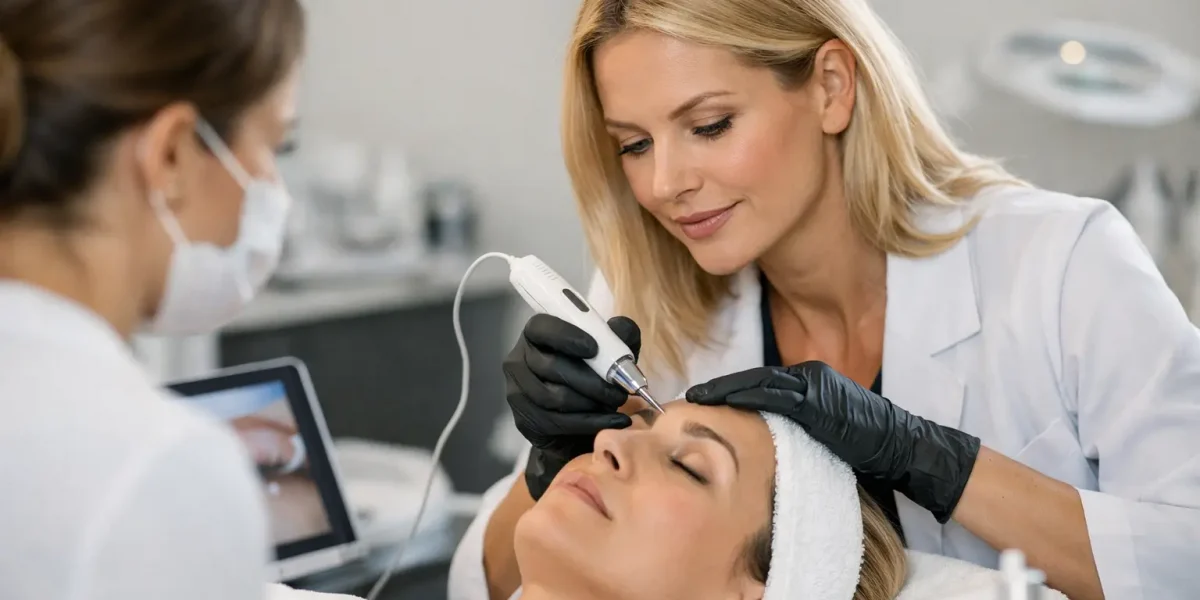
Adding a new treatment to your menu should do more than sound impressive – it should raise your standards, strengthen your results, and make clients feel they are in expert hands. A plasma fibroblast training course is worth considering when you want a service that speaks directly to what clients ask for most: tighter skin, softer lines, better definition, and visible improvement without surgery.
For beauty professionals, that appeal matters. Clients are more informed than ever, but they are also more selective. They want treatments that look refined, heal predictably, and deliver change they can actually see. That means your training cannot be surface-level. It has to prepare you to treat safely, assess correctly, and create results that protect your reputation.
What a plasma fibroblast training course should really teach
A strong course is not just about learning how to hold a device. That is the easy part. The real value is in understanding skin behavior, treatment depth, tissue response, healing stages, and client selection.
Plasma fibroblast treatments work by creating controlled micro-trauma on the skin’s surface to trigger tightening and collagen activity. On paper, that sounds straightforward. In practice, outcomes depend on precision. The spacing of treatment points, the treatment pattern, the area being worked on, and the skin condition in front of you all affect the final result.
This is where beginners often misjudge the service. They assume the machine creates the outcome. It does not. The provider does. A proper course teaches why one client heals beautifully while another may need a more conservative plan, a staged approach, or may not be a candidate at all.
Why training quality matters more than device marketing
The aesthetics industry is full of fast promises. You will see devices marketed as easy to use, beginner-friendly, or designed for instant business growth. That kind of language is tempting, especially if you are trying to expand your income quickly. But fast entry without proper education usually creates inconsistent work.
A good plasma fibroblast training course puts safety ahead of speed. It covers contraindications, skin typing, aftercare, infection control, treatment mapping, and realistic expectations. It should also explain what this treatment can improve well and where restraint is smarter than overpromising.
For example, loose upper eyelid skin, fine lines around the mouth, and localized crepey texture often respond differently than deeper folds or heavily sun-damaged skin. Some clients may need combination planning or repeat sessions. If a course presents every concern as equally treatable, that is a red flag.
What to look for in a plasma fibroblast training course
Hands-on learning matters. Watching videos or reviewing a manual can introduce the theory, but technique develops through live demonstration, supervised practice, and direct correction. If training does not include real-time feedback, you are missing one of the most important parts.
You also want a trainer with actual treatment experience, not just a certificate chain. Founder-led education tends to be more practical because it comes from years of treating real faces, correcting real concerns, and managing real healing patterns. That kind of experience shows up in the details – how to approach asymmetry, when to reduce intensity, how to plan sessions for mature skin, and how to communicate aftercare in a way clients will actually follow.
Look closely at whether the course includes skin assessment and consultation training. Technical skill alone is not enough. Before you ever perform a treatment, you need to know how to screen for medical concerns, discuss downtime honestly, and explain expected improvement without exaggeration. That conversation is part of the result.
The business case for adding plasma fibroblast
When performed well, this treatment fits a strong niche in aesthetics. Many clients want lifting and tightening but are not ready for surgery, do not want injectables, or simply prefer a treatment that supports their own collagen response. That creates demand from women who want natural-looking improvement with less interruption to daily life.
From a provider perspective, it can also position your business differently. Instead of competing only on basic facials or price-sensitive services, you step into a more advanced category. Clients tend to view specialized skin tightening treatments as expertise-based services, which means education, consultation quality, and visible outcomes become part of your brand value.
That said, not every business should add it right away. If your current practice struggles with sanitation systems, documentation, consent processes, or post-treatment support, advanced services can expose those weaknesses fast. The treatment itself may be exciting, but your business infrastructure has to be ready to support it.
Skill, healing, and client trust
The providers who do best with fibroblast treatments are usually the ones who respect the healing process. They do not rush results. They do not oversell downtime as nothing. And they do not treat every client the same way.
Clients appreciate honesty. If swelling is likely in a delicate area, say so. If social downtime may matter for several days, explain it clearly. If a client is not an ideal candidate because of skin tone considerations, healing concerns, or unrealistic expectations, that should be part of your professional judgment.
A quality plasma fibroblast training course teaches this kind of decision-making. It helps you build trust by giving you language, structure, and confidence. That is especially important with treatments on visible areas like the eyes, forehead, and around the mouth, where clients are paying close attention to both the process and the outcome.
Training should cover more than treatment technique
The best courses prepare you for the full client journey. That includes photography, charting, consent, pre-care instructions, aftercare support, and follow-up timing. These are not small administrative details. They are part of professional delivery and legal protection.
Marketing guidance can also be useful, but it should come second to clinical competence. If a course spends more time telling you how to sell than how to assess, treat, and support healing, the priorities are backwards.
Strong education should leave you able to answer practical client questions with confidence. How long will results last? When will they see improvement? How uncomfortable is treatment? What does healing look like from day one to week six? Those answers shape booking decisions and reduce anxiety.
At Isa Skincare, this treatment category is framed around visible lift, fast healing, and long-term skin improvement, which is exactly how professionals should be taught to think about it – as a precision service built on outcomes, not hype.
Who benefits most from this training
A plasma fibroblast training course makes the most sense for aestheticians, beauty professionals, and treatment providers who want to move into advanced rejuvenation services. It is especially valuable if your clients already ask for non-surgical lifting, wrinkle softening, or better skin firmness.
It can also be a smart fit if you want to build a more specialized identity in your market. Offering a treatment is one thing. Becoming known for refined, consistent results is another. Training is the bridge between those two positions.
Still, it depends on your goals. If you prefer low-commitment services with no downtime and minimal consultation demands, this may not be your next step. Plasma treatments require stronger screening, clearer aftercare, and more hands-on expertise than entry-level services. That is not a drawback – it is simply the reality of working at a higher level.
Questions to ask before enrolling
Before choosing any plasma fibroblast training course, ask what kind of hands-on practice is included, whether live models are part of the training, and what post-course support looks like. Ask how contraindications are taught, how skin types are addressed, and whether the educator has a track record of treating clients as well as teaching students.
You should also ask how realistic the course is about results and healing. Good education does not promise perfection. It teaches precision, judgment, and patient planning. It gives you the confidence to perform well and the discipline to know when not to treat.
That is what separates a provider with a new machine from a provider with real authority.
If you are serious about offering advanced skin tightening, choose training that sharpens your eye, strengthens your standards, and helps you deliver results clients can feel proud to wear.